"We can forgive Major Colvin, who out of his frustration and despair, found himself condoning something which can't possibly be condoned. We can do that much. But, gentlemen, what we can't forgive, what I can't forgive, ever, is how we, you, me, this administration, all of us, how we turned away from those streets in West Baltimore. The poor, the sick, the swollen underclass of our city, trapped in the wreckage of neighborhoods which were once so prized, communities which we failed to defend, which we surrendered to the horrors of the drug trade. And if this disaster demands anything of us as a city, it demands that we say enough; enough to the despair which makes policemen even think about surrender; enough to that fact that these neighborhoods are not saved or are beyond saving; enough to this administration’s indecisiveness and lethargy, to the garbage which goes uncollected, the lots and rowhouses which stay vacant; the addicts that go untreated. The working men and women who every day are denied a chance at economic freedom. Enough to the crime which everyday chokes more and more of the life from our city. And, the thing of it is if we don’t take responsibility and step up , not just for the mistakes and the miscues, but for whether or not we are going to win this battle for our streets. If that doesn’t happen we are going to lose these neighborhoods and ultimately this city, forever. If we don’t have the courage and the conviction to fight this war the way it should be fought; the way it needs to be fought, using every weapon we can possibly muster; if that doesn’t happen, then we are staring at defeat. And that defeat should not and cannot and will not be forgiven.
Councilor Thomas J. Carcetti, City of Baltimore
AKA Aidan Gillen. “The Wire” Season 3, Episode 12 “Mission Accomplished”
Saturday, April 02, 2011


Wednesday, July 07, 2010
What Do Women Want
I want a red dress.
I want it flimsy and cheap,
I want it too tight, I want to wear it
until someone tears it off me.
I want it sleeveless and backless,
this dress, so no one has to guess
what's underneath. I want to walk down
the street past Thrifty's and the hardware store
with all those keys glittering in the window,
past Mr. and Mrs. Wong selling day-old
donuts in their café, past the Guerra brothers
slinging pigs from the truck and onto the dolly,
hoisting the slick snouts over their shoulders.
I want to walk like I'm the only
woman on earth and I can have my pick.
I want that red dress bad.
I want it to confirm
your worst fears about me,
to show you how little I care about you
or anything except what
I want. When I find it, I'll pull that garment
from its hanger like I'm choosing a body
to carry me into this world, through
the birth-cries and the love-cries too,
and I'll wear it like bones, like skin,
it'll be the goddamned
dress they bury me in.
-- Kim Addonizio [Claudia Dunne]
I want it flimsy and cheap,
I want it too tight, I want to wear it
until someone tears it off me.
I want it sleeveless and backless,
this dress, so no one has to guess
what's underneath. I want to walk down
the street past Thrifty's and the hardware store
with all those keys glittering in the window,
past Mr. and Mrs. Wong selling day-old
donuts in their café, past the Guerra brothers
slinging pigs from the truck and onto the dolly,
hoisting the slick snouts over their shoulders.
I want to walk like I'm the only
woman on earth and I can have my pick.
I want that red dress bad.
I want it to confirm
your worst fears about me,
to show you how little I care about you
or anything except what
I want. When I find it, I'll pull that garment
from its hanger like I'm choosing a body
to carry me into this world, through
the birth-cries and the love-cries too,
and I'll wear it like bones, like skin,
it'll be the goddamned
dress they bury me in.
-- Kim Addonizio [Claudia Dunne]
Thursday, March 18, 2010
Two Tramps In Mud Time
A Further Range Out of the mud two strangers came
And caught me splitting wood in the yard,
And one of them put me off my aim
By hailing cheerily "Hit them hard!"
I knew pretty well why he had dropped behind
And let the other go on a way.
I knew pretty well what he had in mind:
He wanted to take my job for pay.
Good blocks of oak it was I split,
As large around as the chopping block;
And every piece I squarely hit
Fell splinterless as a cloven rock.
The blows that a life of self-control
Spares to strike for the common good,
That day, giving a loose to my soul,
I spent on the unimportant wood.The sun was warm but the wind was chill.
You know how it is with an April day
When the sun is out and the wind is still,
You're one month on in the middle of May.
But if you so much as dare to speak,
A cloud comes over the sunlit arch,
A wind comes off a frozen peak,
And you're two months back in the middle of March.A bluebird comes tenderly up to alight
And turns to the wind to unruffle a plume,
His song so pitched as not to excite
A single flower as yet to bloom.
It is snowing a flake; and he half knew
Winter was only playing possum.
Except in color he isn't blue,
But he wouldn't advise a thing to blossom.The water for which we may have to look
In summertime with a witching wand,
In every wheelrut's now a brook,
In every print of a hoof a pond.
Be glad of water, but don't forget
The lurking frost in the earth beneath
That will steal forth after the sun is set
And show on the water its crystal teeth.The time when most I loved my task
The two must make me love it more
By coming with what they came to ask.
You'd think I never had felt before
The weight of an ax-head poised aloft,
The grip of earth on outspread feet,
The life of muscles rocking soft
And smooth and moist in vernal heat.Out of the wood two hulking tramps
(From sleeping God knows where last night,
But not long since in the lumber camps).
They thought all chopping was theirs of right.
Men of the woods and lumberjacks,
They judged me by their appropriate tool.
Except as a fellow handled an ax
They had no way of knowing a fool.
Nothing on either side was said.
They knew they had but to stay their stay
And all their logic would fill my head:
As that I had no right to play
With what was another man's work for gain.
My right might be love but theirs was need.
And where the two exist in twain
Theirs was the better right--agreed.
But yield who will to their separation,
My object in living is to unite
My avocation and my vocation
As my two eyes make one in sight.
Only where love and need are one,
And the work is play for mortal stakes,
Is the deed ever really done
For Heaven and the future's sakes.
--Robert Frost
And caught me splitting wood in the yard,
And one of them put me off my aim
By hailing cheerily "Hit them hard!"
I knew pretty well why he had dropped behind
And let the other go on a way.
I knew pretty well what he had in mind:
He wanted to take my job for pay.
Good blocks of oak it was I split,
As large around as the chopping block;
And every piece I squarely hit
Fell splinterless as a cloven rock.
The blows that a life of self-control
Spares to strike for the common good,
That day, giving a loose to my soul,
I spent on the unimportant wood.The sun was warm but the wind was chill.
You know how it is with an April day
When the sun is out and the wind is still,
You're one month on in the middle of May.
But if you so much as dare to speak,
A cloud comes over the sunlit arch,
A wind comes off a frozen peak,
And you're two months back in the middle of March.A bluebird comes tenderly up to alight
And turns to the wind to unruffle a plume,
His song so pitched as not to excite
A single flower as yet to bloom.
It is snowing a flake; and he half knew
Winter was only playing possum.
Except in color he isn't blue,
But he wouldn't advise a thing to blossom.The water for which we may have to look
In summertime with a witching wand,
In every wheelrut's now a brook,
In every print of a hoof a pond.
Be glad of water, but don't forget
The lurking frost in the earth beneath
That will steal forth after the sun is set
And show on the water its crystal teeth.The time when most I loved my task
The two must make me love it more
By coming with what they came to ask.
You'd think I never had felt before
The weight of an ax-head poised aloft,
The grip of earth on outspread feet,
The life of muscles rocking soft
And smooth and moist in vernal heat.Out of the wood two hulking tramps
(From sleeping God knows where last night,
But not long since in the lumber camps).
They thought all chopping was theirs of right.
Men of the woods and lumberjacks,
They judged me by their appropriate tool.
Except as a fellow handled an ax
They had no way of knowing a fool.
Nothing on either side was said.
They knew they had but to stay their stay
And all their logic would fill my head:
As that I had no right to play
With what was another man's work for gain.
My right might be love but theirs was need.
And where the two exist in twain
Theirs was the better right--agreed.
But yield who will to their separation,
My object in living is to unite
My avocation and my vocation
As my two eyes make one in sight.
Only where love and need are one,
And the work is play for mortal stakes,
Is the deed ever really done
For Heaven and the future's sakes.
--Robert Frost
Saturday, March 13, 2010
Post-Punk Homecoming
After the manager embezzled
the proceeds and bought himself
a shiny foreign car, we uncovered
bills from every collection agency
in town and panicked one night
when the lights went out
in our shady, rented house.
We took off in different
directions. I couldn't account
for most of my clothes. I sat
in the yard, at home with my dad,
shucking corn as an act of contrition,
and I conceded again and again
that yes, we’d been lucky, and no,
I couldn't say precisely how
we got so dumb,
because everything we did
was big and bright and very loud,
and everyone applauded.
--Mariette Landry
the proceeds and bought himself
a shiny foreign car, we uncovered
bills from every collection agency
in town and panicked one night
when the lights went out
in our shady, rented house.
We took off in different
directions. I couldn't account
for most of my clothes. I sat
in the yard, at home with my dad,
shucking corn as an act of contrition,
and I conceded again and again
that yes, we’d been lucky, and no,
I couldn't say precisely how
we got so dumb,
because everything we did
was big and bright and very loud,
and everyone applauded.
--Mariette Landry
Wednesday, January 20, 2010
Ulysses
It little profits that an idle king,
By this still hearth, among these barren crags,
Matched with and aged wife, I mete and dole
Unequal laws unto a savage race,
That hoard, and sleep, and feed, and know not me.
I cannot rest from travel: I will drink
Life to the lees: all times I have enjoyed
Greatly, have suffered greatly, both with those
That loved me, and alone; on shore, and when
Through scudding drifts the rainy Hyades
Vexed the dim sea: I am become a name;
For always roaming with a hungry heart
Much have I seen and known; cities of men
And manners, climates, councils, governments,
Myself not least, but honoured of them all;
And drunk delight of battle with my peers,
Far on the ringing plains of windy Troy.
I am a part of all that I have met;
Yet all experience is an arch wherethrough
Gleams that untravelled world, whose margin fades
For ever and for ever when I move.
How dull it is to pause, to make an end,
To rust unburnished, not to shine in use!
As though to breathe were life. Life piled on life
Were all too little, and of one to me
Little remains: but every hour is saved
From that eternal silence, something more,
A bringer of new things; and vile it were
For some three suns to store and hoard myself,
And this grey spirit yearning in desire
To follow knowledge like a sinking star,
Beyond the utmost bound of human thought.
This is my son, mine own Telemachus,
To whom I leave the sceptre and the isle -
Well-loved of me, discerning to fulfil
This labour, by slow prudence to make mild
A rugged people, and through soft degrees
Subdue them to the useful and the good.
Most blameless is he, centred in the sphere
Of common duties, decent not to fail
In offices of tenderness, and pay
Meet adoration to my household gods,
When I am gone. He works his work, I mine.
There lies the port; the vessel puffs her sail:
There gloom the dark broad seas. My mariners,
Souls that have toiled, and wrought, and thought with me -
That ever with a frolic welcome took
The thunder and the sunshine, and opposed
Free hearts, free foreheads -you and I are old;
Old age hath yet his honour and his toil;
Death closes all: but something ere the end,
Some work of noble note, may yet be done,
Not unbecoming men that strove with Gods.
The lights begin to twinkle from the rocks:
The long day wanes: the slow moon climbs: the deep
Moans round with many voices. Come, my friends,
'Tis not too late to seek a newer world.
Push off, and sitting well in order smite
The sounding furrows; for my purpose holds
To sail beyond the sunset, and the baths
Of all the western stars, until I die.
It may be that the gulfs will wash us down:
It may be we shall touch the Happy Isles,
And see the great Achilles, whom we knew.
Though much is taken, much abides; and though
We are not now that strength which in old days
Moved earth and heaven; that which we are, we are;
One equal temper of heroic hearts,
Made weak by time and fate, but strong in will
To strive, to seek, to find, and not to yield.
--Lord Alfred Tennyson
By this still hearth, among these barren crags,
Matched with and aged wife, I mete and dole
Unequal laws unto a savage race,
That hoard, and sleep, and feed, and know not me.
I cannot rest from travel: I will drink
Life to the lees: all times I have enjoyed
Greatly, have suffered greatly, both with those
That loved me, and alone; on shore, and when
Through scudding drifts the rainy Hyades
Vexed the dim sea: I am become a name;
For always roaming with a hungry heart
Much have I seen and known; cities of men
And manners, climates, councils, governments,
Myself not least, but honoured of them all;
And drunk delight of battle with my peers,
Far on the ringing plains of windy Troy.
I am a part of all that I have met;
Yet all experience is an arch wherethrough
Gleams that untravelled world, whose margin fades
For ever and for ever when I move.
How dull it is to pause, to make an end,
To rust unburnished, not to shine in use!
As though to breathe were life. Life piled on life
Were all too little, and of one to me
Little remains: but every hour is saved
From that eternal silence, something more,
A bringer of new things; and vile it were
For some three suns to store and hoard myself,
And this grey spirit yearning in desire
To follow knowledge like a sinking star,
Beyond the utmost bound of human thought.
This is my son, mine own Telemachus,
To whom I leave the sceptre and the isle -
Well-loved of me, discerning to fulfil
This labour, by slow prudence to make mild
A rugged people, and through soft degrees
Subdue them to the useful and the good.
Most blameless is he, centred in the sphere
Of common duties, decent not to fail
In offices of tenderness, and pay
Meet adoration to my household gods,
When I am gone. He works his work, I mine.
There lies the port; the vessel puffs her sail:
There gloom the dark broad seas. My mariners,
Souls that have toiled, and wrought, and thought with me -
That ever with a frolic welcome took
The thunder and the sunshine, and opposed
Free hearts, free foreheads -you and I are old;
Old age hath yet his honour and his toil;
Death closes all: but something ere the end,
Some work of noble note, may yet be done,
Not unbecoming men that strove with Gods.
The lights begin to twinkle from the rocks:
The long day wanes: the slow moon climbs: the deep
Moans round with many voices. Come, my friends,
'Tis not too late to seek a newer world.
Push off, and sitting well in order smite
The sounding furrows; for my purpose holds
To sail beyond the sunset, and the baths
Of all the western stars, until I die.
It may be that the gulfs will wash us down:
It may be we shall touch the Happy Isles,
And see the great Achilles, whom we knew.
Though much is taken, much abides; and though
We are not now that strength which in old days
Moved earth and heaven; that which we are, we are;
One equal temper of heroic hearts,
Made weak by time and fate, but strong in will
To strive, to seek, to find, and not to yield.
--Lord Alfred Tennyson
Monday, April 27, 2009
Band-Aids
I have a Band-Aid on my finger,
One on my knee, and one on my nose,
One on my heel, and two on my shoulder,
Three on my elbow, and nine on my toes.
Two on my wrist, and one on my ankle,
One on my chin, and one on my thigh,
Four on my belly, and five on my bottom,
One on my forehead, and one on my eye.
One on my neck, and in case I might need ‘em
I have a box full of thirty-five more.
But oh! I do think it’s sort of a pity
I don’t have a cut or a sore!
One on my knee, and one on my nose,
One on my heel, and two on my shoulder,
Three on my elbow, and nine on my toes.
Two on my wrist, and one on my ankle,
One on my chin, and one on my thigh,
Four on my belly, and five on my bottom,
One on my forehead, and one on my eye.
One on my neck, and in case I might need ‘em
I have a box full of thirty-five more.
But oh! I do think it’s sort of a pity
I don’t have a cut or a sore!
He Wishes for the Cloths of Heaven
Had I the heaven's embroidered cloths,
Enwrought with golden and silver light,
The blue and the dim and the dark cloths
Of night and light and the half-light,
I would spread the cloths under your feet:
But I, being poor, have only my dreams;
I have spread my dreams under your feet;
Tread softly because you tread on my dreams
Enwrought with golden and silver light,
The blue and the dim and the dark cloths
Of night and light and the half-light,
I would spread the cloths under your feet:
But I, being poor, have only my dreams;
I have spread my dreams under your feet;
Tread softly because you tread on my dreams
When You Are Old
When you are old and gray and full of sleep,
And nodding by the fire, take down this book,
And slowly read, and dream of the soft look
Your eyes had once, and of their shadows deep;
How many loved your moments of glad grace,
And loved your beauty with love false or true,
But one man loved the pilgrim soul in you,
And loved the sorrows of your changing face;
And bending down beside the glowing bars,
Murmur, a little sadly, how Love fled
And paced upon the mountains overhead
And hid his face among a crowd of stars.
And nodding by the fire, take down this book,
And slowly read, and dream of the soft look
Your eyes had once, and of their shadows deep;
How many loved your moments of glad grace,
And loved your beauty with love false or true,
But one man loved the pilgrim soul in you,
And loved the sorrows of your changing face;
And bending down beside the glowing bars,
Murmur, a little sadly, how Love fled
And paced upon the mountains overhead
And hid his face among a crowd of stars.
Wild Geese
You do not have to be good.
You do not have to walk on your knees
for a hundred miles through the desert, repenting.
You only have to let the soft animal of your body
love what it loves.
Tell me about despair, yours, and I will tell you mine.
Meanwhile the world goes on.
Meanwhile the sun and the clear pebbles of the rain
are moving across the landscapes,
over the prairies and the deep trees,
the mountains and the rivers.
Meanwhile the wild geese, high in the clean blue air,
are heading home again.
Whoever you are, no matter how lonely,
the world offers itself to your imagination,
calls to you like the wild geese, harsh and exciting--
over and over announcing your place
in the family of things.
You do not have to walk on your knees
for a hundred miles through the desert, repenting.
You only have to let the soft animal of your body
love what it loves.
Tell me about despair, yours, and I will tell you mine.
Meanwhile the world goes on.
Meanwhile the sun and the clear pebbles of the rain
are moving across the landscapes,
over the prairies and the deep trees,
the mountains and the rivers.
Meanwhile the wild geese, high in the clean blue air,
are heading home again.
Whoever you are, no matter how lonely,
the world offers itself to your imagination,
calls to you like the wild geese, harsh and exciting--
over and over announcing your place
in the family of things.
Wednesday, February 18, 2009
The Fugitive Poets of Fenway Park
The Chilean secret police
searched everywhere
for the poet Neruda: in the dark shafts
of mines, in the boxcars of railroad yards,
in the sewers of Santiago.
The government intended to confiscate his mouth
and extract the poems one by one like bad teeth.
But the mines and boxcars and sewers were empty.
I know where he was. Neruda was at Fenway Park,
burly and bearded in a flat black cap, hidden
in the kaleidoscope of the bleachers.
He sat quietly, chomping a hot dog
when Ted Williams walked to the crest of the diamond,
slender as my father remembers him,
squinting at the pitcher, bat swaying in a memory of trees.
The stroke was a pendulum of long muscle and wood,
Ted's face tilted up, the home run
zooming into the right field grandstand.
Then the crowd stood together, cheering
for this blasphemer of newsprint, the heretic
who would not tip his cap as he toed home plate
or grin like a war hero at the sportswriters
surrounding his locker for a quote.
The fugitive poet could not keep silent,
standing on his seat to declaim the ode
erupted in crowd-bewildering Spanish from his mouth:
Praise Ted Williams, raising his sword
cut from the ash tree, the ball
a white planet glowing in the atmosphere
of the right field grandstand!
Praise the Wall rising
like a great green wave
from the green sea of the outfield!
Praise the hot dog, pink meat,
pork snouts, sawdust, mouse feces,
human hair, plugging our intestines,
yet baptized joyfully with mustard!
Praise the wobbling drunk, seasick beer
in hand, staring at the number on his ticket,
demanding my seat!
Everyone gawked at the man standing
on his seat, bellowing poetry in Spanish.
Anonymous no longer,
Neruda saw the Chilean secret police
as they scrambled through the bleachers,
pointing and shouting, so the poet
jumped a guardrail to disappear
through a Fenway tunnel,
the black cap flying from his head
and spinning into center field.
This is true. I was there at Fenway
on August 7, 1948, even if I was born
exactly nine years later
when my father
almost named me Theodore.
-- Martin Espada [Connie Breece]
searched everywhere
for the poet Neruda: in the dark shafts
of mines, in the boxcars of railroad yards,
in the sewers of Santiago.
The government intended to confiscate his mouth
and extract the poems one by one like bad teeth.
But the mines and boxcars and sewers were empty.
I know where he was. Neruda was at Fenway Park,
burly and bearded in a flat black cap, hidden
in the kaleidoscope of the bleachers.
He sat quietly, chomping a hot dog
when Ted Williams walked to the crest of the diamond,
slender as my father remembers him,
squinting at the pitcher, bat swaying in a memory of trees.
The stroke was a pendulum of long muscle and wood,
Ted's face tilted up, the home run
zooming into the right field grandstand.
Then the crowd stood together, cheering
for this blasphemer of newsprint, the heretic
who would not tip his cap as he toed home plate
or grin like a war hero at the sportswriters
surrounding his locker for a quote.
The fugitive poet could not keep silent,
standing on his seat to declaim the ode
erupted in crowd-bewildering Spanish from his mouth:
Praise Ted Williams, raising his sword
cut from the ash tree, the ball
a white planet glowing in the atmosphere
of the right field grandstand!
Praise the Wall rising
like a great green wave
from the green sea of the outfield!
Praise the hot dog, pink meat,
pork snouts, sawdust, mouse feces,
human hair, plugging our intestines,
yet baptized joyfully with mustard!
Praise the wobbling drunk, seasick beer
in hand, staring at the number on his ticket,
demanding my seat!
Everyone gawked at the man standing
on his seat, bellowing poetry in Spanish.
Anonymous no longer,
Neruda saw the Chilean secret police
as they scrambled through the bleachers,
pointing and shouting, so the poet
jumped a guardrail to disappear
through a Fenway tunnel,
the black cap flying from his head
and spinning into center field.
This is true. I was there at Fenway
on August 7, 1948, even if I was born
exactly nine years later
when my father
almost named me Theodore.
-- Martin Espada [Connie Breece]
When You Are Old
WHEN you are old and gray and full of sleep,
And nodding by the fire, take down this book,
And slowly read, and dream of the soft look
Your eyes had once, and of their shadows deep;
How many loved your moments of glad grace,
And loved your beauty with love false or true,
But one man loved the pilgrim soul in you,
And loved the sorrows of your changing face;
And bending down beside the glowing bars,
Murmur, a little sadly, how Love fled
And paced upon the mountains overhead
And hid his face among a crowd of stars.
-- William Butler Yeats [Elizabeth]
And nodding by the fire, take down this book,
And slowly read, and dream of the soft look
Your eyes had once, and of their shadows deep;
How many loved your moments of glad grace,
And loved your beauty with love false or true,
But one man loved the pilgrim soul in you,
And loved the sorrows of your changing face;
And bending down beside the glowing bars,
Murmur, a little sadly, how Love fled
And paced upon the mountains overhead
And hid his face among a crowd of stars.
-- William Butler Yeats [Elizabeth]
Forgetfulness
Forgetfulness
The name of the author is the first to go
followed obediently by the title, the plot,
the heartbreaking conclusion, the entire novel
which suddenly becomes one you have never read,
never even heard of,
as if, one by one, the memories you used to harbor
decided to retire to the southern hemisphere of the brain,
to a little fishing village where there are no phones.
Long ago you kissed the names of the nine Muses goodbye
and watched the quadratic equation pack its bag,
and even now as you memorize the order of the planets,
something else is slipping away, a state flower perhaps,
the address of an uncle, the capital of Paraguay.
Whatever it is you are struggling to remember,
it is not poised on the tip of your tongue,
not even lurking in some obscure corner of your spleen.
It has floated away down a dark mythological river
whose name begins with an L as far as you can recall,
well on your own way to oblivion where you will join those
who have even forgotten how to swim and how to ride a bicycle.
No wonder you rise in the middle of the night
to look up the date of a famous battle in a book on war.
No wonder the moon in the window seems to have drifted
out of a love poem that you used to know by heart.
-- Billy Collins [Fred Elliott-Hart]
The name of the author is the first to go
followed obediently by the title, the plot,
the heartbreaking conclusion, the entire novel
which suddenly becomes one you have never read,
never even heard of,
as if, one by one, the memories you used to harbor
decided to retire to the southern hemisphere of the brain,
to a little fishing village where there are no phones.
Long ago you kissed the names of the nine Muses goodbye
and watched the quadratic equation pack its bag,
and even now as you memorize the order of the planets,
something else is slipping away, a state flower perhaps,
the address of an uncle, the capital of Paraguay.
Whatever it is you are struggling to remember,
it is not poised on the tip of your tongue,
not even lurking in some obscure corner of your spleen.
It has floated away down a dark mythological river
whose name begins with an L as far as you can recall,
well on your own way to oblivion where you will join those
who have even forgotten how to swim and how to ride a bicycle.
No wonder you rise in the middle of the night
to look up the date of a famous battle in a book on war.
No wonder the moon in the window seems to have drifted
out of a love poem that you used to know by heart.
-- Billy Collins [Fred Elliott-Hart]
Mossbawn Sunlight
1. Sunlight
There was a sunlit absence.
The helmeted pump in the yard
heated its iron,
water honeyed
in the slung bucket
and the sun stood
like a griddle cooling
against the wall
of each long afternoon.
So, her hands scuffled
over the bakeboard,
the reddening stove
sent its plaque of heat
against her where she stood
in a floury apron
by the window.
Now she dusts the board
with a goose's wing,
now sits, broad-lapped,
with whitened nails
and measling shins:
here is a space
again, the scone rising
to the tick of two clocks.
And here is love
like a tinsmith's scoop
sunk past its gleam
in the meal-bin.
-- Seamus Heaney [Liam O'Connor]
There was a sunlit absence.
The helmeted pump in the yard
heated its iron,
water honeyed
in the slung bucket
and the sun stood
like a griddle cooling
against the wall
of each long afternoon.
So, her hands scuffled
over the bakeboard,
the reddening stove
sent its plaque of heat
against her where she stood
in a floury apron
by the window.
Now she dusts the board
with a goose's wing,
now sits, broad-lapped,
with whitened nails
and measling shins:
here is a space
again, the scone rising
to the tick of two clocks.
And here is love
like a tinsmith's scoop
sunk past its gleam
in the meal-bin.
-- Seamus Heaney [Liam O'Connor]
The Ides of March, 2008
Wouldn't it take a certain arrogance or pride to hold a party on the Ides of March?
Or, for that matter, to attend one?
Are we too busy to heed the signs? To unaware of portentous omens? Too lacking in simple humanity?
If this were a Greek tragedy, the gods would certainly punish such hubris:
-- there'd be salmonella in the artichoke dip
-- the keg would run flat, or worse, dry
-- Jerry's falsetto during "Danny Boy" would shatter our windshields
-- the stage, at the end of Act V, would be littered with corpses
But, then again, the Irish have been beating the odds for centuries.
They majored in tragedy, minored in hard knocks.
And a wiser poet than I once said, "I'd walk a longish road, through drear, hard rain, and fog, for a well-pulled pint."
Who am I, a New York Jew, to argue?
Was it Yeats? Or maybe Brendan Behan?
Either way, it was another scribe - a Brit - who coined for us "the Ides of March."
I first read it in 10th grade English class of Mr. Wills,
Who, if the second-floor bathroom stall was accurate, eats pills.
In Act 1, Scene 2 of Julius Caesar, a Soothsayer, yes, a soothsayer, (Rome was lousy with them in those days) cries, "Beware the Ides of March!"
He says it three times before exiting stage right, and we all know that bad luck runs in threes, like the number of leaves on the much more common, unlucky clover.
Caesar, stubborn as an Irish mule, pays no heed.
But there are, to be sure, other signs.
Looking out on a violent storm, here is Casca, a conspirator, talking to Cicero, a Senator, in Act 1, Scene 3:
"Are not you moved, when all the sway of earth
Shakes like a thing unfirm? O Cicero,
I have seen tempests, when the scolding winds
Have rived the knotty oaks, and I have seen
The ambitious ocean swell and rage and foam,
To be exalted with the threatening clouds:
But never till to-night, never till now,
Did I go through a tempest dropping fire.
Either there is a civil strife in heaven,
Or else the world, too saucy with the gods,
Incenses them to send destruction."
And, if that's not enough, here's the dream of Calpurnia (wife of Caesar) from Act II, Scene 2:
"Caesar, I never stood on ceremonies,
Yet now they fright me. There is one within,
Besides the things that we have heard and seen,
Recounts most horrid sights seen by the watch.
A lioness hath whelped in the streets;
And graves have yawn'd, and yielded up their dead;
Fierce fiery warriors fought upon the clouds,
In ranks and squadrons and right form of war,
Which drizzled blood upon the Capitol;
The noise of battle hurtled in the air,
Horses did neigh, and dying men did groan,
And ghosts did shriek and squeal about the streets.
O Caesar! these things are beyond all use,
And I do fear them."
So the heavens are raining fire and blood; ghosts and the undead are strolling about; Lions are whelping in the town square,
And what does Caesar do?
Ignores it all. He might just as well have gone to a St. Patrick's Day party for all he cared.
"Cowards die many times before their deaths;
The valiant never taste of death but once," he smugly answers his spouse.
"Of all the wonders that I yet have heard.
It seems to me most strange that men should fear;
Seeing that death, a necessary end,
Will come when it will come."
You can say that again. He gets it in the back nine times at the start of Act III.
Always, as my Calpurnia would say, listen to the woman.
But here I stand, despite the Soothsayer's prophesy, on the Ides of March.
What's a Roman with an omen to do?
I could cite my father, a voluntary poet in his own right, when he heard me practicing Marc Antony's soliloquy for Mr. Wills' class:
Quoth he: "He who drinks beer, Shakespeare."
-- Steve Hodin
Or, for that matter, to attend one?
Are we too busy to heed the signs? To unaware of portentous omens? Too lacking in simple humanity?
If this were a Greek tragedy, the gods would certainly punish such hubris:
-- there'd be salmonella in the artichoke dip
-- the keg would run flat, or worse, dry
-- Jerry's falsetto during "Danny Boy" would shatter our windshields
-- the stage, at the end of Act V, would be littered with corpses
But, then again, the Irish have been beating the odds for centuries.
They majored in tragedy, minored in hard knocks.
And a wiser poet than I once said, "I'd walk a longish road, through drear, hard rain, and fog, for a well-pulled pint."
Who am I, a New York Jew, to argue?
Was it Yeats? Or maybe Brendan Behan?
Either way, it was another scribe - a Brit - who coined for us "the Ides of March."
I first read it in 10th grade English class of Mr. Wills,
Who, if the second-floor bathroom stall was accurate, eats pills.
In Act 1, Scene 2 of Julius Caesar, a Soothsayer, yes, a soothsayer, (Rome was lousy with them in those days) cries, "Beware the Ides of March!"
He says it three times before exiting stage right, and we all know that bad luck runs in threes, like the number of leaves on the much more common, unlucky clover.
Caesar, stubborn as an Irish mule, pays no heed.
But there are, to be sure, other signs.
Looking out on a violent storm, here is Casca, a conspirator, talking to Cicero, a Senator, in Act 1, Scene 3:
"Are not you moved, when all the sway of earth
Shakes like a thing unfirm? O Cicero,
I have seen tempests, when the scolding winds
Have rived the knotty oaks, and I have seen
The ambitious ocean swell and rage and foam,
To be exalted with the threatening clouds:
But never till to-night, never till now,
Did I go through a tempest dropping fire.
Either there is a civil strife in heaven,
Or else the world, too saucy with the gods,
Incenses them to send destruction."
And, if that's not enough, here's the dream of Calpurnia (wife of Caesar) from Act II, Scene 2:
"Caesar, I never stood on ceremonies,
Yet now they fright me. There is one within,
Besides the things that we have heard and seen,
Recounts most horrid sights seen by the watch.
A lioness hath whelped in the streets;
And graves have yawn'd, and yielded up their dead;
Fierce fiery warriors fought upon the clouds,
In ranks and squadrons and right form of war,
Which drizzled blood upon the Capitol;
The noise of battle hurtled in the air,
Horses did neigh, and dying men did groan,
And ghosts did shriek and squeal about the streets.
O Caesar! these things are beyond all use,
And I do fear them."
So the heavens are raining fire and blood; ghosts and the undead are strolling about; Lions are whelping in the town square,
And what does Caesar do?
Ignores it all. He might just as well have gone to a St. Patrick's Day party for all he cared.
"Cowards die many times before their deaths;
The valiant never taste of death but once," he smugly answers his spouse.
"Of all the wonders that I yet have heard.
It seems to me most strange that men should fear;
Seeing that death, a necessary end,
Will come when it will come."
You can say that again. He gets it in the back nine times at the start of Act III.
Always, as my Calpurnia would say, listen to the woman.
But here I stand, despite the Soothsayer's prophesy, on the Ides of March.
What's a Roman with an omen to do?
I could cite my father, a voluntary poet in his own right, when he heard me practicing Marc Antony's soliloquy for Mr. Wills' class:
Quoth he: "He who drinks beer, Shakespeare."
-- Steve Hodin
Rocket to Space
NASA built a rocket to space
And everyone wanted to go
So they had a very big race
To see who would run round Mexico
Who won but a simple millipede with many many legs
And they decided to let him go, despite the others' pleas and begs
He shot past Mars
Quickly passing our stars
Now he sends postcards from Zigzagabaroon
Telling NASA "Hope to see you soon!"
-- Matthew Rappe
And everyone wanted to go
So they had a very big race
To see who would run round Mexico
Who won but a simple millipede with many many legs
And they decided to let him go, despite the others' pleas and begs
He shot past Mars
Quickly passing our stars
Now he sends postcards from Zigzagabaroon
Telling NASA "Hope to see you soon!"
-- Matthew Rappe
Magdalen Walks
THE little white clouds are racing over the sky,
And the fields are strewn with the gold of the flower of March,
The daffodil breaks under foot, and the tasselled larch
Sways and swings as the thrush goes hurrying by.
A delicate odour is borne on the wings of the morning breeze, 5
The odour of leaves, and of grass, and of newly up-turned earth,
The birds are singing for joy of the Spring’s glad birth,
Hopping from branch to branch on the rocking trees.
And all the woods are alive with the murmur and sound of Spring,
And the rosebud breaks into pink on the climbing briar, 10
And the crocus-bed is a quivering moon of fire
Girdled round with the belt of an amethyst ring.
And the plane to the pine-tree is whispering some tale of love
Till it rustles with laughter and tosses its mantle of green,
And the gloom of the wych-elm’s hollow is lit with the iris sheen 15
Of the burnished rainbow throat and the silver breast of a dove.
See! the lark starts up from his bed in the meadow there,
Breaking the gossamer threads and the nets of dew,
And flashing a-down the river, a flame of blue!
The kingfisher flies like an arrow, and wounds the air. 20
-- Oscar Wilde [Becky Miller]
And the fields are strewn with the gold of the flower of March,
The daffodil breaks under foot, and the tasselled larch
Sways and swings as the thrush goes hurrying by.
A delicate odour is borne on the wings of the morning breeze, 5
The odour of leaves, and of grass, and of newly up-turned earth,
The birds are singing for joy of the Spring’s glad birth,
Hopping from branch to branch on the rocking trees.
And all the woods are alive with the murmur and sound of Spring,
And the rosebud breaks into pink on the climbing briar, 10
And the crocus-bed is a quivering moon of fire
Girdled round with the belt of an amethyst ring.
And the plane to the pine-tree is whispering some tale of love
Till it rustles with laughter and tosses its mantle of green,
And the gloom of the wych-elm’s hollow is lit with the iris sheen 15
Of the burnished rainbow throat and the silver breast of a dove.
See! the lark starts up from his bed in the meadow there,
Breaking the gossamer threads and the nets of dew,
And flashing a-down the river, a flame of blue!
The kingfisher flies like an arrow, and wounds the air. 20
-- Oscar Wilde [Becky Miller]
O Captain, My Captain!
1
O CAPTAIN! my Captain! our fearful trip is done;
The ship has weather’d every rack, the prize we sought is won;
The port is near, the bells I hear, the people all exulting,
While follow eyes the steady keel, the vessel grim and daring:
But O heart! heart! heart! 5
O the bleeding drops of red,
Where on the deck my Captain lies,
Fallen cold and dead.
2
O Captain! my Captain! rise up and hear the bells;
Rise up—for you the flag is flung—for you the bugle trills; 10
For you bouquets and ribbon’d wreaths—for you the shores a-crowding;
For you they call, the swaying mass, their eager faces turning;
Here Captain! dear father!
This arm beneath your head;
It is some dream that on the deck, 15
You’ve fallen cold and dead.
3
My Captain does not answer, his lips are pale and still;
My father does not feel my arm, he has no pulse nor will;
The ship is anchor’d safe and sound, its voyage closed and done;
From fearful trip, the victor ship, comes in with object won; 20
Exult, O shores, and ring, O bells!
But I, with mournful tread,
Walk the deck my Captain lies,
Fallen cold and dead.
-- Walt Whitman
O CAPTAIN! my Captain! our fearful trip is done;
The ship has weather’d every rack, the prize we sought is won;
The port is near, the bells I hear, the people all exulting,
While follow eyes the steady keel, the vessel grim and daring:
But O heart! heart! heart! 5
O the bleeding drops of red,
Where on the deck my Captain lies,
Fallen cold and dead.
2
O Captain! my Captain! rise up and hear the bells;
Rise up—for you the flag is flung—for you the bugle trills; 10
For you bouquets and ribbon’d wreaths—for you the shores a-crowding;
For you they call, the swaying mass, their eager faces turning;
Here Captain! dear father!
This arm beneath your head;
It is some dream that on the deck, 15
You’ve fallen cold and dead.
3
My Captain does not answer, his lips are pale and still;
My father does not feel my arm, he has no pulse nor will;
The ship is anchor’d safe and sound, its voyage closed and done;
From fearful trip, the victor ship, comes in with object won; 20
Exult, O shores, and ring, O bells!
But I, with mournful tread,
Walk the deck my Captain lies,
Fallen cold and dead.
-- Walt Whitman
Portrait With Still-Life
I find no reason to distract my father who is yelling at the empty prescription
bottle. After he returned from the war, which he didn't find to his liking, he
operated a drill press without distinction for nearly fifty years. He raised a
family that was barely passable. He strode forth only when the weather fit
his shoes. He stood in the backyard and painted all the landscapes that
passed through his head, "like tulip petals on their way to a farter version of
heaven." He learned to read when he was a very young child, but found this
was an impediment later in his life. He was not my father, but a kitchen
appliance in need of repairs.
-- John Yau [Jan Reitsma]
bottle. After he returned from the war, which he didn't find to his liking, he
operated a drill press without distinction for nearly fifty years. He raised a
family that was barely passable. He strode forth only when the weather fit
his shoes. He stood in the backyard and painted all the landscapes that
passed through his head, "like tulip petals on their way to a farter version of
heaven." He learned to read when he was a very young child, but found this
was an impediment later in his life. He was not my father, but a kitchen
appliance in need of repairs.
-- John Yau [Jan Reitsma]
Saturday, July 12, 2008
There Once Was an Irish Mechanic
There once was an Irish mechanic
Who was not very prone to a panic
When I heard this I thought
I might give him a shot
At a problem I knew was satanic.
Cars and trucks and bikes, you see
Are serviced every day
With logic and a diagram
You’ll soon be on your way
But mobile homes are different,
They’re relatively few,
And mine was even further rare,
There was no number 2.
For years I’d felt a growing pride
In my country, right or wrong,
And wrote a lot of glowing words,
I even tried a song
But the battle groups and radar domes
Could not be contained
The anti anti missle missles,
The rays that leave no stains
What concept could I summarize?
What image could I use?
To show the world the way I felt
That we’re not going to lose
The way of life so righteous
So pure and worry free
That paper bags or plastic are
Of no concern to me.
The seasons came the seasons went
And still the struggle grew,
My eyelid started quivering
And then my gums withdrew
But late one night it came to me
The thing our nation lacked
A symbol of the leadership
To get us back on track
A vision of the future
The way we must be led
A mobile home, of stainless steel
In the shape of Cheney’s head!
Our country’s been deprived of him
By those who make him stay
In that heavy duty bunker
So very far away
He must be safe from harm of course,
So this could be the thing
To bring his words and spirit out
And let the country sing
The songs of liberation
The terrorists must die
The weapons of mass destruction will be shot into the sky.
I shopped around and found a firm,
A family I could trust
To fabricate and execute
My vision of this bust
This rolling art would incorporate
The latest of today,
The cellular and satellite
And some birdies tucked away
For that special rare occasion
When good friends should happen by
If the urge should come upon us
To shoot at things that fly
The day arrived when it was done
It gleamed and sparkled in the sun
I took the keys
Sat in the mouth
Released the brake
And headed south
I took a route along the shore
Perhaps to hear the ocean’s roar
Instead I heard a sound most queer
Emitted from my hero’s ear
As I drove the volume rose
The sound now bellowed from the nose
I tried to place where I had heard
A sound so like that chilling word
Obama was, it seemed to me the cry
That soon enveloped me.
Where to go to fix this curse
I queried near and far
There’s only one can tackle this,
And he’s likely at the bar.
So many people said the same
I finally headed east
And set a course for sunrise
With hope to slay this beast!
I found him where they said I would
Seated on a stool
Sipping oysters from their shells
And looking rather cool.
I told him what had made me cringe
And begged him for some aid
He said it could be anything
I could not be delayed
He said I’d have to leave it
He’d look it over well
I bit my lip and trembled
My eyes began to well
You don’t know how important
This is to our way of life
Our country and our values
Your children and your wife
He slowly slid another oyster
Off it’s pearly shell
If I can’t fix it mister
I’ll send myself to hell.
For days I gnawed my knuckles
My hair came out in clumps
My lower lip was sushi
My fingernails were stumps.
When long at last the message came
To come and pick it up
I spilled my coffee on my leg
Then tripped upon the cup.
A Larry Craig was on each ear
A Ferraro on the nose
A Clinton clambered on each eyebrow
Grabbing with their toes…..
3/15/08
Ed Braverman
TO BE CONTINUED
Who was not very prone to a panic
When I heard this I thought
I might give him a shot
At a problem I knew was satanic.
Cars and trucks and bikes, you see
Are serviced every day
With logic and a diagram
You’ll soon be on your way
But mobile homes are different,
They’re relatively few,
And mine was even further rare,
There was no number 2.
For years I’d felt a growing pride
In my country, right or wrong,
And wrote a lot of glowing words,
I even tried a song
But the battle groups and radar domes
Could not be contained
The anti anti missle missles,
The rays that leave no stains
What concept could I summarize?
What image could I use?
To show the world the way I felt
That we’re not going to lose
The way of life so righteous
So pure and worry free
That paper bags or plastic are
Of no concern to me.
The seasons came the seasons went
And still the struggle grew,
My eyelid started quivering
And then my gums withdrew
But late one night it came to me
The thing our nation lacked
A symbol of the leadership
To get us back on track
A vision of the future
The way we must be led
A mobile home, of stainless steel
In the shape of Cheney’s head!
Our country’s been deprived of him
By those who make him stay
In that heavy duty bunker
So very far away
He must be safe from harm of course,
So this could be the thing
To bring his words and spirit out
And let the country sing
The songs of liberation
The terrorists must die
The weapons of mass destruction will be shot into the sky.
I shopped around and found a firm,
A family I could trust
To fabricate and execute
My vision of this bust
This rolling art would incorporate
The latest of today,
The cellular and satellite
And some birdies tucked away
For that special rare occasion
When good friends should happen by
If the urge should come upon us
To shoot at things that fly
The day arrived when it was done
It gleamed and sparkled in the sun
I took the keys
Sat in the mouth
Released the brake
And headed south
I took a route along the shore
Perhaps to hear the ocean’s roar
Instead I heard a sound most queer
Emitted from my hero’s ear
As I drove the volume rose
The sound now bellowed from the nose
I tried to place where I had heard
A sound so like that chilling word
Obama was, it seemed to me the cry
That soon enveloped me.
Where to go to fix this curse
I queried near and far
There’s only one can tackle this,
And he’s likely at the bar.
So many people said the same
I finally headed east
And set a course for sunrise
With hope to slay this beast!
I found him where they said I would
Seated on a stool
Sipping oysters from their shells
And looking rather cool.
I told him what had made me cringe
And begged him for some aid
He said it could be anything
I could not be delayed
He said I’d have to leave it
He’d look it over well
I bit my lip and trembled
My eyes began to well
You don’t know how important
This is to our way of life
Our country and our values
Your children and your wife
He slowly slid another oyster
Off it’s pearly shell
If I can’t fix it mister
I’ll send myself to hell.
For days I gnawed my knuckles
My hair came out in clumps
My lower lip was sushi
My fingernails were stumps.
When long at last the message came
To come and pick it up
I spilled my coffee on my leg
Then tripped upon the cup.
A Larry Craig was on each ear
A Ferraro on the nose
A Clinton clambered on each eyebrow
Grabbing with their toes…..
3/15/08
Ed Braverman
TO BE CONTINUED
Friday, March 28, 2008
Poker
There were five of us playing that night,
Padge, Kieran, Neal and me --
and, stretched out in his coffin, Uncle Charlie.
We dealt him a hand each time
and took turns to bet for him,
waiving his losses, pooling his wins,
for what good were coins to him?
What could he win but his life?
Still, five of us played that night
and when we stopped it was daylight.
We left the cards with him
to remind him, forever, of that game
and Padge, Kieran, Neal and me
went up the road to our beds
and slept until we buried him,
then played until we had to agree
the good hands had gone with Uncle Charlie.
--Matthew Sweeney [Nora O'Connor]
Padge, Kieran, Neal and me --
and, stretched out in his coffin, Uncle Charlie.
We dealt him a hand each time
and took turns to bet for him,
waiving his losses, pooling his wins,
for what good were coins to him?
What could he win but his life?
Still, five of us played that night
and when we stopped it was daylight.
We left the cards with him
to remind him, forever, of that game
and Padge, Kieran, Neal and me
went up the road to our beds
and slept until we buried him,
then played until we had to agree
the good hands had gone with Uncle Charlie.
--Matthew Sweeney [Nora O'Connor]
Monday, March 17, 2008
The Tree and the Garden
There was an oak tree
In the front of the house
Which blazes forth in spring and is
Struck by changing colors as though
It was lightning instead of time
Which brought the fall
It’s known to all rememberers
Who have ever
Suffered its shade
While out the back
There is a garden, which
With an unassuming, steady gait
Filled plates
And beds of marigolds
Accompanied tomatoes
In a forever dance
Keeping pace, without rest
With never a fallow season blessed
And as for time and passers-by
Who could know? that it was
Neither the sun nor water
Nor seeds nor spring that gave it such
Plenty while
Dispensing safety
But rather
The hoe and rake
And touch
And grace
And give and take
And tender love
Of the gardener’s hand.
Michael O'Connor
In the front of the house
Which blazes forth in spring and is
Struck by changing colors as though
It was lightning instead of time
Which brought the fall
It’s known to all rememberers
Who have ever
Suffered its shade
While out the back
There is a garden, which
With an unassuming, steady gait
Filled plates
And beds of marigolds
Accompanied tomatoes
In a forever dance
Keeping pace, without rest
With never a fallow season blessed
And as for time and passers-by
Who could know? that it was
Neither the sun nor water
Nor seeds nor spring that gave it such
Plenty while
Dispensing safety
But rather
The hoe and rake
And touch
And grace
And give and take
And tender love
Of the gardener’s hand.
Michael O'Connor
Thursday, February 28, 2008

Sunday, January 13, 2008
The Change
The season turned like the page of a glossy fashion magazine.
In the park the daffodils came up
and in the parking lot, the new car models were on parade.
Sometimes I think that nothing really changes -
The young girls show the latest crop of tummies,
and the new president proves that he's a dummy.
but remember the tennis match we watched that year?
Right before our eyes
some tough little European blonde
pitted against that big black girl from Alabama,
cornrowed hair and Zulu bangles on her arms,
some outrageous name like Vondella Aphrodite -
We were just walking past the lounge
and got sucked in by the screen above the bar,
and pretty soon
we started to care about who won,
putting ourselves into each whacked return
as the volleys went back and forth and back
like some contest between
the old world and the new,
and you loved her complicated hair
and her to-hell-with-everybody stare,
and I,
I couldn't help wanting
the white girl to come out on top,
because she was one of my kind, my tribe,
with her pale eyes and thin lips
and because the black girl was so big
and so black,
so unintimidated,
hitting the ball like she was driving the Emancipation Proclamation
down Abraham Lincoln's throat,
like she wasn't asking anyone's permission.
There are moments when history
passes you so close
you can smell its breath,
you can reach your hand out
and touch it on its flank,
and I don't watch all that much Masterpiece Theatre,
but I could feel the end of an era there
in front of those bleachers full of people
in their Sunday tennis-watching clothes
as that black girl wore down her opponent
then kicked her ass good
then thumped her once more for good measure
and stood up on the red clay court
holding her racket over her head like a guitar.
And the little pink judge
had to climb up on a box
to put the ribbon on her neck,
still managing to smile into the camera flash,
even though everything was changing
and in fact, everything had already changed -
Poof, remember? It was the twentieth century almost gone,
we were there,
and when we went to put it back where it belonged,
it was past us
and we were changed.
Tony Hoagland
Note: You can hear this poem read aloud by Garrison Keillor by clicking here and scrolling down a bit.
In the park the daffodils came up
and in the parking lot, the new car models were on parade.
Sometimes I think that nothing really changes -
The young girls show the latest crop of tummies,
and the new president proves that he's a dummy.
but remember the tennis match we watched that year?
Right before our eyes
some tough little European blonde
pitted against that big black girl from Alabama,
cornrowed hair and Zulu bangles on her arms,
some outrageous name like Vondella Aphrodite -
We were just walking past the lounge
and got sucked in by the screen above the bar,
and pretty soon
we started to care about who won,
putting ourselves into each whacked return
as the volleys went back and forth and back
like some contest between
the old world and the new,
and you loved her complicated hair
and her to-hell-with-everybody stare,
and I,
I couldn't help wanting
the white girl to come out on top,
because she was one of my kind, my tribe,
with her pale eyes and thin lips
and because the black girl was so big
and so black,
so unintimidated,
hitting the ball like she was driving the Emancipation Proclamation
down Abraham Lincoln's throat,
like she wasn't asking anyone's permission.
There are moments when history
passes you so close
you can smell its breath,
you can reach your hand out
and touch it on its flank,
and I don't watch all that much Masterpiece Theatre,
but I could feel the end of an era there
in front of those bleachers full of people
in their Sunday tennis-watching clothes
as that black girl wore down her opponent
then kicked her ass good
then thumped her once more for good measure
and stood up on the red clay court
holding her racket over her head like a guitar.
And the little pink judge
had to climb up on a box
to put the ribbon on her neck,
still managing to smile into the camera flash,
even though everything was changing
and in fact, everything had already changed -
Poof, remember? It was the twentieth century almost gone,
we were there,
and when we went to put it back where it belonged,
it was past us
and we were changed.
Tony Hoagland
Note: You can hear this poem read aloud by Garrison Keillor by clicking here and scrolling down a bit.
Friday, January 11, 2008
Make the Pie Higher
A poem in honor of our 43rd President made up entirely of his quotes.
I think we all agree, the past is over.
This is still a dangerous world.
It's a world of madmen and uncertainty
And potential mental losses.
Rarely is the question asked
Is our children learning?
Will the highways of the Internet
Become more few?
How many hands have I shaked?
They misunderestimate me.
I am a pitbull on the pantleg of opportunity.
I know that the human being
And the fish can coexist.
Families is where our nation finds hope,
Where our wings take dream.
Put food on your family!
Knock down the tollbooth!
Vulcanize society!
Make the pie higher!
I am the Decider!
I think we all agree, the past is over.
This is still a dangerous world.
It's a world of madmen and uncertainty
And potential mental losses.
Rarely is the question asked
Is our children learning?
Will the highways of the Internet
Become more few?
How many hands have I shaked?
They misunderestimate me.
I am a pitbull on the pantleg of opportunity.
I know that the human being
And the fish can coexist.
Families is where our nation finds hope,
Where our wings take dream.
Put food on your family!
Knock down the tollbooth!
Vulcanize society!
Make the pie higher!
I am the Decider!
Thursday, May 24, 2007
The Geese Cry Out
Tares make their own way
squeeze into each furrow sown
Wheat,
Rye,
Alfalfa,
Corn, Beets, Spuds.
Uranium,
rich and dangerous,
cuts veins through
Schist, Shale,
Sandstone, Slate.
Irrigation ditches divide pastures
dug at right angles to fences,
laid out just so by pioneer fathers,
demarcate that which concerns us,
from that which does not.
The left hand knows not
what the right hand has wrought:
Things knew their places,
Until my generation.
We cry out in confusion as we migrate,
East to Massachussetts,
South to California.
Like so many geese flying overhead,
Cousins honk out secrets,
one did not know that the other didn’t know:
"Honk!...Gave them nothing!"
"Honk!...Died destitute!"
"Honk!... Thru the window!"
Forgive us–we did not,
do not, know the lay of this land.
The clan’s unmentioned names,
the Dead,
furtive amid late
Great Grandmother’s letters,
whisper,
so we did not hear them:
"You kin come home now--
He did not die."
Andrea L. Seek 5/23/2007
squeeze into each furrow sown
Wheat,
Rye,
Alfalfa,
Corn, Beets, Spuds.
Uranium,
rich and dangerous,
cuts veins through
Schist, Shale,
Sandstone, Slate.
Irrigation ditches divide pastures
dug at right angles to fences,
laid out just so by pioneer fathers,
demarcate that which concerns us,
from that which does not.
The left hand knows not
what the right hand has wrought:
Things knew their places,
Until my generation.
We cry out in confusion as we migrate,
East to Massachussetts,
South to California.
Like so many geese flying overhead,
Cousins honk out secrets,
one did not know that the other didn’t know:
"Honk!...Gave them nothing!"
"Honk!...Died destitute!"
"Honk!... Thru the window!"
Forgive us–we did not,
do not, know the lay of this land.
The clan’s unmentioned names,
the Dead,
furtive amid late
Great Grandmother’s letters,
whisper,
so we did not hear them:
"You kin come home now--
He did not die."
Andrea L. Seek 5/23/2007
The Heart Asks Pleasure First
The heart asks pleasure first,
And then, excuse from pain;
And then, those little anodynes
That deaden suffering,
And then, to go to sleep;
And then, if it should be
The will of its Inquisitor,
The liberty to die.
The heart asks pleasure first,
And then, excuse from pain;
And then, those little anodynes
That deaden suffering,
And then, to go to sleep;
And then, if it should be
The will of its Inquisitor,
The liberty to die.
Emily Dickinson
And then, excuse from pain;
And then, those little anodynes
That deaden suffering,
And then, to go to sleep;
And then, if it should be
The will of its Inquisitor,
The liberty to die.
The heart asks pleasure first,
And then, excuse from pain;
And then, those little anodynes
That deaden suffering,
And then, to go to sleep;
And then, if it should be
The will of its Inquisitor,
The liberty to die.
Emily Dickinson
Wild Nights! Wild Nights!
WILD nights! Wild nights!
Were I with thee,
Wild nights should be
Our luxury!
Futile the winds
To a heart in port,—
Done with the compass,
Done with the chart.
Rowing in Eden!
Ah! the sea!
Might I but moor
To-night in thee!
Emily Dickinson
Were I with thee,
Wild nights should be
Our luxury!
Futile the winds
To a heart in port,—
Done with the compass,
Done with the chart.
Rowing in Eden!
Ah! the sea!
Might I but moor
To-night in thee!
Emily Dickinson
Wednesday, May 23, 2007


Tuesday, April 17, 2007
Standing Tall
In honor of Martin Luther King
Some kings rule their kingdoms sitting down
Surrounded by luxury, soft cushions and fans
But this King stood strong
stood proud
stood tall
When the driver told Rosa
"Move to the back of the bus!"
When the waiter told students
"We don't serve your kind!"
When the Mayor told voters
"Your vote don't count!"
And when the sheriff told marchers
"Get off our streets!"
using fire hoses, police dogs and cattle prods
to move them along
This King stood strong
stood proud
stood tall
Speaking of peace
of love
and children
hand in hand
free at last
free at last
When some yelled for violence
For angry revenge
An eye for an eye
And a tooth for a tooth
He stood his ground
Preaching peace
And when some spat out hate
He stood there smiling
Spreading love
Until it rolled like the sea across the land
Sweeping away Jim Crow
Breaking down the walls
Ringing the bell
Joyfully
For Freedom
Until
Standing on the mountain top
They shot him
Coldly
Hoping to see him fall
Hoping to put him away
To bring him low
But this King
even in death
even today
stands strong
stands proud
stands tall
And we remember
Jamie McKenzie [Megan Gillis]
Some kings rule their kingdoms sitting down
Surrounded by luxury, soft cushions and fans
But this King stood strong
stood proud
stood tall
When the driver told Rosa
"Move to the back of the bus!"
When the waiter told students
"We don't serve your kind!"
When the Mayor told voters
"Your vote don't count!"
And when the sheriff told marchers
"Get off our streets!"
using fire hoses, police dogs and cattle prods
to move them along
This King stood strong
stood proud
stood tall
Speaking of peace
of love
and children
hand in hand
free at last
free at last
When some yelled for violence
For angry revenge
An eye for an eye
And a tooth for a tooth
He stood his ground
Preaching peace
And when some spat out hate
He stood there smiling
Spreading love
Until it rolled like the sea across the land
Sweeping away Jim Crow
Breaking down the walls
Ringing the bell
Joyfully
For Freedom
Until
Standing on the mountain top
They shot him
Coldly
Hoping to see him fall
Hoping to put him away
To bring him low
But this King
even in death
even today
stands strong
stands proud
stands tall
And we remember
Jamie McKenzie [Megan Gillis]
Monday, April 16, 2007
Why I Am Not a Painter
I am not a painter, I am a poet.
Why? I think I would rather be
a painter, but I am not. Well,
for instance, Mike Goldberg
is starting a painting. I drop in.
"Sit down and have a drink" he
says. I drink; we drink. I look
up. "You have SARDINES in it."
"Yes, it needed something there."
"Oh." I go and the days go by
and I drop in again. The painting
is going on, and I go, and the days
go by. I drop in. The painting is
finished. "Where's SARDINES?"
All that's left is just
letters, "It was too much," Mike says.
But me? One day I am thinking of
a color: orange. I write a line
about orange. Pretty soon it is a
whole page of words, not lines.
Then another page. There should be
so much more, not of orange, of
words, of how terrible orange is
and life. Days go by. It is even in
prose, I am a real poet. My poem
is finished and I haven't mentioned
orange yet. It's twelve poems, I call
it ORANGES. And one day in a gallery
I see Mike's painting, called SARDINES.
Frank O'Hara
Why? I think I would rather be
a painter, but I am not. Well,
for instance, Mike Goldberg
is starting a painting. I drop in.
"Sit down and have a drink" he
says. I drink; we drink. I look
up. "You have SARDINES in it."
"Yes, it needed something there."
"Oh." I go and the days go by
and I drop in again. The painting
is going on, and I go, and the days
go by. I drop in. The painting is
finished. "Where's SARDINES?"
All that's left is just
letters, "It was too much," Mike says.
But me? One day I am thinking of
a color: orange. I write a line
about orange. Pretty soon it is a
whole page of words, not lines.
Then another page. There should be
so much more, not of orange, of
words, of how terrible orange is
and life. Days go by. It is even in
prose, I am a real poet. My poem
is finished and I haven't mentioned
orange yet. It's twelve poems, I call
it ORANGES. And one day in a gallery
I see Mike's painting, called SARDINES.
Frank O'Hara
Video Cuisine
They are weighing the babies again on color television.
They are hanging these small bags of bones up in canvas slings
to determine which ones will receive the dried-milk mush,
the concentrate made out of ground-up trash fish.
For years we have watched them, back-lit by the desert,
these miles of dusty hands holding out goatskins or cups,
their animals dead or dying of rinderpest,
and after the credits come up I continue to sit
through Dinner with Julia, where, in a French fish
poacher big enough for a small brown baby, an
Alaska salmon simmers in a court bouillon.
For a first course, steak tartare to awaken the palate.
With it Julia suggests a zinfandel. This scene
has a polite, a touristy flavor to it,
and I let it play. But somewhere Oxfam goes on
spooning gluey gruel between the parched lips
of potbellied children, the ones who perhaps can be saved
from kwashiorkor—an ancient Ghanaian word—
though with probable lowered IQs, the voiceover explains,
caused by protein deficiencies linked to the drought
and the drought has grown worse with the gradual increase in herds
overgrazing the thin forage grasses of the Sahel.
This, says the voice, can be laid to the natural greed
of the nomad deceived by technicians digging new wells
which means (a slow pan of the sand) that the water table has dropped.
And now to Julia’s table is borne the resplendent fish.
Always the camera is angled so that the guests look up.
Among them I glimpse that sly Dean, Jonathan Swift.
After the credits come up I continue to sit
with those who are starving to death in a distant nation
squatting, back-lit by the desert, hands out, in my head
and the Dublin Dean squats there too, observing the population
that waits for too little dried milk, white rice, trash fish.
Always the camera is angled so they look up
while their babies are weighed in slings on color television,
look into our living rooms and the shaded rooms we sleep in.
Maxine W. Kumin
They are hanging these small bags of bones up in canvas slings
to determine which ones will receive the dried-milk mush,
the concentrate made out of ground-up trash fish.
For years we have watched them, back-lit by the desert,
these miles of dusty hands holding out goatskins or cups,
their animals dead or dying of rinderpest,
and after the credits come up I continue to sit
through Dinner with Julia, where, in a French fish
poacher big enough for a small brown baby, an
Alaska salmon simmers in a court bouillon.
For a first course, steak tartare to awaken the palate.
With it Julia suggests a zinfandel. This scene
has a polite, a touristy flavor to it,
and I let it play. But somewhere Oxfam goes on
spooning gluey gruel between the parched lips
of potbellied children, the ones who perhaps can be saved
from kwashiorkor—an ancient Ghanaian word—
though with probable lowered IQs, the voiceover explains,
caused by protein deficiencies linked to the drought
and the drought has grown worse with the gradual increase in herds
overgrazing the thin forage grasses of the Sahel.
This, says the voice, can be laid to the natural greed
of the nomad deceived by technicians digging new wells
which means (a slow pan of the sand) that the water table has dropped.
And now to Julia’s table is borne the resplendent fish.
Always the camera is angled so that the guests look up.
Among them I glimpse that sly Dean, Jonathan Swift.
After the credits come up I continue to sit
with those who are starving to death in a distant nation
squatting, back-lit by the desert, hands out, in my head
and the Dublin Dean squats there too, observing the population
that waits for too little dried milk, white rice, trash fish.
Always the camera is angled so they look up
while their babies are weighed in slings on color television,
look into our living rooms and the shaded rooms we sleep in.
Maxine W. Kumin
How it Is
Shall I say how it is in your clothes?
A month after your death I wear your blue jacket.
The dog at the center of my life recognizes
you’ve come to visit, he’s ecstatic.
In the left pocket, a hole.
In the right, a parking ticket
delivered up last August on Bay State Road.
In my heart, a scatter like milkweed,
a flinging from the pods of the soul.
My skin presses your old outline.
It is hot and dry inside.
I think of the last day of your life,
old friend, how I would unwind it, paste
it together in a different collage,
back from the death car idling in the garage,
back up the stairs, your praying hands unlaced,
reassembling the bits of bread and tuna fish
into a ceremony of sandwich,
running the home movie backward to a space
we could be easy in, a kitchen place
with vodka and ice, our words like living meat.
Dear friend, you have excited crowds
with your example. They swell
like wine bags, straining at your seams.
I will be years gathering up our words,
fishing out letters, snapshots, stains,
leaning my ribs against this durable cloth
to put on the dumb blue blazer of your death.
Maxine Kumin
A month after your death I wear your blue jacket.
The dog at the center of my life recognizes
you’ve come to visit, he’s ecstatic.
In the left pocket, a hole.
In the right, a parking ticket
delivered up last August on Bay State Road.
In my heart, a scatter like milkweed,
a flinging from the pods of the soul.
My skin presses your old outline.
It is hot and dry inside.
I think of the last day of your life,
old friend, how I would unwind it, paste
it together in a different collage,
back from the death car idling in the garage,
back up the stairs, your praying hands unlaced,
reassembling the bits of bread and tuna fish
into a ceremony of sandwich,
running the home movie backward to a space
we could be easy in, a kitchen place
with vodka and ice, our words like living meat.
Dear friend, you have excited crowds
with your example. They swell
like wine bags, straining at your seams.
I will be years gathering up our words,
fishing out letters, snapshots, stains,
leaning my ribs against this durable cloth
to put on the dumb blue blazer of your death.
Maxine Kumin
The Best of Poems
I once fashioned myself a poet
But then I started kindergarten
So I put dreams on hold.
Until senior year, when the
University was
Forced to admit me to a
Poetry composition seminar.
Like poetry, there were
Rules and
They had no choice.
Neither did the Professor,
Nor my fellow serious students.
I was serious too.
Although I didn't dress all in
Black - more likely all purple,
And I didn't
wear Prominent Glasses
Despite having 20/20 vision,
And nor did I smoke
Clove cigarettes,
I was a serious poet
About to
Spew forth unimaginable
Poetic delights.
I labored and
Labored and
Labored to
Translate
Transcendent
Thoughts into
Fragmented sentences;
Searching to find the
Unfamiliar to
Capture the
Simple;
Seeking to
Distinguish the
Absurdit from the
Sublime.
The first time, and
Only time,
I shared
A carefully constructed
poem, I
Experienced the
Fulfilling, albeit
Fleeting,
Euphoria of my
Tangled and
Disjointed consciousness
Resonating with others.
Before I uttered the
Penultimate poetic
Word, twelve hands
Flew up in the air to
Comment and
Construct.
"She was angry at him for
not loving her,
And he was angry at her
for loving him."
Eureka! My
Favorite passage...the
Climax.
I couldn't wait to send the
poem to my
Kindergarten teacher.
At last,
Redemption.
Next hand?
Indeed, a
Powerful
Emotion.
I had struck a chord and
Provided
Nourishment for
Thought.
Next hand?
"She was angry at him for
not loving her,
And he was angry at her
for loving him."
Indeed -- my words
Even
More
Profoundly
Brilliant than I,
Myself, could
Comprehend.
Next hand?
"She was angry at him for not loving
her,
And he was angry at her for loving
him."
This must be my fuure: a
Budding
Poet Lauriat's cross to bear --
"Our"
Trifling woes...
Politely thanking Readers for
Sharing Their
Relational and Reflective experiences
No matter how Repetitive or
Redundant or
Recurring.
Next hand?
"She was angry at him for not loving
her,
And he was angry at her for loving
him."
Perhaps,
Patience not my virtue and
Paradoxically antithetical to
Practice,
What about the o
Other
Twenty-three pages of the
Poem?
Next hand?
"She was angry at him for not loving
her,
And he was angry at her for loving him."
An Authentic Anglophile -- my first
AA Group,
What about my
Subtle literary references to
Barrett Browning's How Do I Love
Thee?Chaucer's The Love Unfeigned?Finch's The Apology?
Keats' To Hope?
Marlowe's Who Ever Loved, That
Not Loved at First Sight?
Rossetti's Bride Song?
Tennyson's Marriage Morning? and
Sid Vicious' My Way?
Next hand?
"She was angry at him for not
loving her,
And he was angry at her for loving
him."
Yo!
What about the
Allegories
Analogies and
Alliterations
And my late-blooming
Sophomoric,
Jejune and
Puerile
Life-questions?
Next hand?
"She was angry at hinm for not
loving her,
And he was angry at her for loving
him."
Sisters and Brothers 0
What about the
Tug, pull and sway of the
Iambic pentameter?
The reminiscient
Choppy rhythms of
Classical
Composers lacking
Consonants:
Chopin, Devorak, Rachmaninov,
Shostakovich and Tchaikovsky, to
Name many.
Next hand?
"She was angry at hinm for not
loving her,
And he was angry at her for loving
him."
Oy Vey!
What about the
Overwhelming,
Overpowering,
Overstated,
Overloaded,
Overworked and
Overkill
Omnipresence of
Onomatopoeias?
Next hand?
"She was angry at hinm for not
loving her,
And he was angry at her for loving
him."
Knock,knock - is anyone
Home?
what about the
Right-side in,
Right-side out,
Right-side in and
Shake-it-all-about
Hokey-Pokey
Punctuation?
Next hand?
"She was angry at hinm for not
loving her,
And he was angry at her for loving
him."
Blimey!
What about the
Intelligently
Interspersed foreign
language
Refrains -- most notably,
the
Literary renowned
Dithers,
Hithers,
Thithers,
Quivers,
Withers and,
Of course,
Gods and Goddesses of the
Guinness
Induced
Poetry of the
Stout Irish?
Next hand?
Ah, finally, the
Esteemed Professor --
Thirteen had always been my
Lucky
Number.
"She was angry at hinm for not
loving her,
And he was angry at her for loving
him."
Damn.
Damnation.
Damn it All.
Damn Yankees.
The next day I applied to law school
in
Red Sox Nation.
Maybe I should have written:
"She was angry at hinm for not
loving her,
And he was angry at her for loving
him."
Then again,
Maybe
Not.
Sea Green [C. Greene]
But then I started kindergarten
So I put dreams on hold.
Until senior year, when the
University was
Forced to admit me to a
Poetry composition seminar.
Like poetry, there were
Rules and
They had no choice.
Neither did the Professor,
Nor my fellow serious students.
I was serious too.
Although I didn't dress all in
Black - more likely all purple,
And I didn't
wear Prominent Glasses
Despite having 20/20 vision,
And nor did I smoke
Clove cigarettes,
I was a serious poet
About to
Spew forth unimaginable
Poetic delights.
I labored and
Labored and
Labored to
Translate
Transcendent
Thoughts into
Fragmented sentences;
Searching to find the
Unfamiliar to
Capture the
Simple;
Seeking to
Distinguish the
Absurdit from the
Sublime.
The first time, and
Only time,
I shared
A carefully constructed
poem, I
Experienced the
Fulfilling, albeit
Fleeting,
Euphoria of my
Tangled and
Disjointed consciousness
Resonating with others.
Before I uttered the
Penultimate poetic
Word, twelve hands
Flew up in the air to
Comment and
Construct.
"She was angry at him for
not loving her,
And he was angry at her
for loving him."
Eureka! My
Favorite passage...the
Climax.
I couldn't wait to send the
poem to my
Kindergarten teacher.
At last,
Redemption.
Next hand?
Indeed, a
Powerful
Emotion.
I had struck a chord and
Provided
Nourishment for
Thought.
Next hand?
"She was angry at him for
not loving her,
And he was angry at her
for loving him."
Indeed -- my words
Even
More
Profoundly
Brilliant than I,
Myself, could
Comprehend.
Next hand?
"She was angry at him for not loving
her,
And he was angry at her for loving
him."
This must be my fuure: a
Budding
Poet Lauriat's cross to bear --
"Our"
Trifling woes...
Politely thanking Readers for
Sharing Their
Relational and Reflective experiences
No matter how Repetitive or
Redundant or
Recurring.
Next hand?
"She was angry at him for not loving
her,
And he was angry at her for loving
him."
Perhaps,
Patience not my virtue and
Paradoxically antithetical to
Practice,
What about the o
Other
Twenty-three pages of the
Poem?
Next hand?
"She was angry at him for not loving
her,
And he was angry at her for loving him."
An Authentic Anglophile -- my first
AA Group,
What about my
Subtle literary references to
Barrett Browning's How Do I Love
Thee?Chaucer's The Love Unfeigned?Finch's The Apology?
Keats' To Hope?
Marlowe's Who Ever Loved, That
Not Loved at First Sight?
Rossetti's Bride Song?
Tennyson's Marriage Morning? and
Sid Vicious' My Way?
Next hand?
"She was angry at him for not
loving her,
And he was angry at her for loving
him."
Yo!
What about the
Allegories
Analogies and
Alliterations
And my late-blooming
Sophomoric,
Jejune and
Puerile
Life-questions?
Next hand?
"She was angry at hinm for not
loving her,
And he was angry at her for loving
him."
Sisters and Brothers 0
What about the
Tug, pull and sway of the
Iambic pentameter?
The reminiscient
Choppy rhythms of
Classical
Composers lacking
Consonants:
Chopin, Devorak, Rachmaninov,
Shostakovich and Tchaikovsky, to
Name many.
Next hand?
"She was angry at hinm for not
loving her,
And he was angry at her for loving
him."
Oy Vey!
What about the
Overwhelming,
Overpowering,
Overstated,
Overloaded,
Overworked and
Overkill
Omnipresence of
Onomatopoeias?
Next hand?
"She was angry at hinm for not
loving her,
And he was angry at her for loving
him."
Knock,knock - is anyone
Home?
what about the
Right-side in,
Right-side out,
Right-side in and
Shake-it-all-about
Hokey-Pokey
Punctuation?
Next hand?
"She was angry at hinm for not
loving her,
And he was angry at her for loving
him."
Blimey!
What about the
Intelligently
Interspersed foreign
language
Refrains -- most notably,
the
Literary renowned
Dithers,
Hithers,
Thithers,
Quivers,
Withers and,
Of course,
Gods and Goddesses of the
Guinness
Induced
Poetry of the
Stout Irish?
Next hand?
Ah, finally, the
Esteemed Professor --
Thirteen had always been my
Lucky
Number.
"She was angry at hinm for not
loving her,
And he was angry at her for loving
him."
Damn.
Damnation.
Damn it All.
Damn Yankees.
The next day I applied to law school
in
Red Sox Nation.
Maybe I should have written:
"She was angry at hinm for not
loving her,
And he was angry at her for loving
him."
Then again,
Maybe
Not.
Sea Green [C. Greene]
Peace
Why oh why
Must the world be with?
anger and hatred
filling the atmosphere
Guns always killing
Hearts always breaking
Beauty constantly being destroyed
The days become short
The nights become longer
Staying awake, to stay
Safe, sheltered, protected
From the hostility
Only in the night
Then the day
Brings the news
The deadly news
Where is grandma?
She is on the news
A tear I shed
So don’t you see?
What a fist can bring
One little threat can cause some ones life to end
Emotionally and physically
If you take a moment to be patient and kind
Or stop and smell the flowers
A person’s life will be saved
From destruction of fervor or deep desire
Sally + Megan Gillis
Must the world be with?
anger and hatred
filling the atmosphere
Guns always killing
Hearts always breaking
Beauty constantly being destroyed
The days become short
The nights become longer
Staying awake, to stay
Safe, sheltered, protected
From the hostility
Only in the night
Then the day
Brings the news
The deadly news
Where is grandma?
She is on the news
A tear I shed
So don’t you see?
What a fist can bring
One little threat can cause some ones life to end
Emotionally and physically
If you take a moment to be patient and kind
Or stop and smell the flowers
A person’s life will be saved
From destruction of fervor or deep desire
Sally + Megan Gillis
A Helping Hand
People say that the sun will come out tomorrow,
others disagree.
They think it will be dark
stay dark
the dark of forever
but I think that can be changed
if one person takes a step up and lends a hand
to charity,
the needy
reaching out
a helping hand can be held
with every tear that reaches the ground,
with every house that is destroyed,
a helping hand can be held
with every natural or not
disaster that strikes upon the earth
we can help
reaching out
helping with hands
those hands
these hands
a difference is made
me, you ,us, them
they, we , us, she, I
can help
with one or more
Helping hands
Megan + Sally Gillis
others disagree.
They think it will be dark
stay dark
the dark of forever
but I think that can be changed
if one person takes a step up and lends a hand
to charity,
the needy
reaching out
a helping hand can be held
with every tear that reaches the ground,
with every house that is destroyed,
a helping hand can be held
with every natural or not
disaster that strikes upon the earth
we can help
reaching out
helping with hands
those hands
these hands
a difference is made
me, you ,us, them
they, we , us, she, I
can help
with one or more
Helping hands
Megan + Sally Gillis
The New Colossus
Not like the brazen giant of Greek fame
With conquering limbs astride from land to land;
Here at our sea-washed, sunset gates shall stand
A mighty woman with a torch, whose flame
Is the imprisoned lightning, and her name
Mother of Exiles. From her beacon-hand
Glows world-wide welcome; her mild eyes command
The air-bridged harbor that twin cities frame,
"Keep, ancient lands, your storied pomp!" cries she
With silent lips. "Give me your tired, your poor,
Your huddled masses yearning to breathe free,
The wretched refuse of your teeming shore,
Send these, the homeless, tempest-tossed to me,
I lift my lamp beside the golden door!"
Emma Lazarus [Maggie O'Connor]
With conquering limbs astride from land to land;
Here at our sea-washed, sunset gates shall stand
A mighty woman with a torch, whose flame
Is the imprisoned lightning, and her name
Mother of Exiles. From her beacon-hand
Glows world-wide welcome; her mild eyes command
The air-bridged harbor that twin cities frame,
"Keep, ancient lands, your storied pomp!" cries she
With silent lips. "Give me your tired, your poor,
Your huddled masses yearning to breathe free,
The wretched refuse of your teeming shore,
Send these, the homeless, tempest-tossed to me,
I lift my lamp beside the golden door!"
Emma Lazarus [Maggie O'Connor]
Overdues
What do I do?
What do I do?
This library book is 42
Years overdue.
I admit that it's mine
But I can't pay the fine--
Should I turn it in
Or hide it again?
What do I do?
What do I do?
Current Mood: school tomorrow, oughtta be sleeping
Shel Silverstein [Owen Kuklinski]
What do I do?
This library book is 42
Years overdue.
I admit that it's mine
But I can't pay the fine--
Should I turn it in
Or hide it again?
What do I do?
What do I do?
Current Mood: school tomorrow, oughtta be sleeping
Shel Silverstein [Owen Kuklinski]
The Mehoo with an Exactly Watt
Knock knock!
Who's there?
Me!
Me who?
That's right!
What's right?
Meehoo!
That's what I want to know!
What's what you want to know?
Me, who?
Yes, exactly!
Exactly what?
Yes, I have an Exactlywatt on a chain!
Exactly what on a chain?
Yes!
Yes what?
No, Exactlywatt!
That's what I want to know!
I told you - Exactlywatt!
Exactly what?
Yes!
Yes what?
Yes, it's with me!
What's with you?
Exactlywatt - that's what's with me.
Me who?
Yes!
Go away!
Knock knock...
Shel Silverstein [Nora O'Connor]
Who's there?
Me!
Me who?
That's right!
What's right?
Meehoo!
That's what I want to know!
What's what you want to know?
Me, who?
Yes, exactly!
Exactly what?
Yes, I have an Exactlywatt on a chain!
Exactly what on a chain?
Yes!
Yes what?
No, Exactlywatt!
That's what I want to know!
I told you - Exactlywatt!
Exactly what?
Yes!
Yes what?
Yes, it's with me!
What's with you?
Exactlywatt - that's what's with me.
Me who?
Yes!
Go away!
Knock knock...
Shel Silverstein [Nora O'Connor]
Roses are Blue!
Roses are blue,
Violets are red.
Hats cover feet,
Socks cover head.
Trees grow short,
Flowers tall.
Mice are big
Hippos small.
Boxes are circles,
Balls are squares.
Eyes are alone,
Noses in pairs.
Chickens roar,
Lions cheep.
Children awake-
Parents asleep!
Author Unknown (to me), [Peninah Hodin]
Violets are red.
Hats cover feet,
Socks cover head.
Trees grow short,
Flowers tall.
Mice are big
Hippos small.
Boxes are circles,
Balls are squares.
Eyes are alone,
Noses in pairs.
Chickens roar,
Lions cheep.
Children awake-
Parents asleep!
Author Unknown (to me), [Peninah Hodin]
Theory
Into love and out again,
Thus I went, and thus I go.
Spare your voice, and hold your pen
Well and bitterly I know
All the songs were ever sung,
All the words were ever said,
Could it be, when I was young
Someone dropped me on my head?
Thus I went, and thus I go.
Spare your voice, and hold your pen
Well and bitterly I know
All the songs were ever sung,
All the words were ever said,
Could it be, when I was young
Someone dropped me on my head?
God Says Yes to Me
I asked God if it was okay to be melodramatic
and she said yes
I asked her if it was okay to be short
and she said it sure is
I asked her if I could wear nail polish
or not wear nail polish
and she said honey
she calls me that sometimes
she said you can do just exactly
what you want to
Thanks God I said
And is it even okay if I don’t paragraph
my letters
Sweetcakes God said
who knows where she picked that up
what I’m telling you is
Yes Yes Yes
Kaylin Haught [Louise Oster]
and she said yes
I asked her if it was okay to be short
and she said it sure is
I asked her if I could wear nail polish
or not wear nail polish
and she said honey
she calls me that sometimes
she said you can do just exactly
what you want to
Thanks God I said
And is it even okay if I don’t paragraph
my letters
Sweetcakes God said
who knows where she picked that up
what I’m telling you is
Yes Yes Yes
Kaylin Haught [Louise Oster]
Boston
I live in a town known as Boston
It's very easy to get lost in
With all the curious tourists
And the history of Fenway Park
Lively, admired pubs
And music in the dark
The talk of Quincy Market
And history of the Freedom Trail
The many brave people who were here,
Like William Bradford on the Mayflower,
That was such a great sail.
Towers like the John Hancock
And places like JP Licks
That everyone knows and loves,
The two hundred year old houses
That are built with bricks
As you can probably see
Everything great was here
The supreme live entertainment
And Sam Adams beer.
Sally Gillis
It's very easy to get lost in
With all the curious tourists
And the history of Fenway Park
Lively, admired pubs
And music in the dark
The talk of Quincy Market
And history of the Freedom Trail
The many brave people who were here,
Like William Bradford on the Mayflower,
That was such a great sail.
Towers like the John Hancock
And places like JP Licks
That everyone knows and loves,
The two hundred year old houses
That are built with bricks
As you can probably see
Everything great was here
The supreme live entertainment
And Sam Adams beer.
Sally Gillis
Phenomenal Woman
Pretty women wonder where my secret lies
I'm not cute or built to suit a model's fashion size
But when I start to tell them
They think I'm telling lies.
I say
It's in the reach of my arms
The span of my hips
The stride of my steps
The curl of my lips.
I'm a woman
Phenomenally
Phenomenal woman
That's me.
I walk into a room
Just as cool as you please
And to a man
The fellows stand or
Fall down on their knees
Then they swarm around me
A hive of honey bees.
I say
It's the fire in my eyes
And the flash of my teeth
The swing of my waist
And the joy in my feet.
I'm a woman
Phenomenally
Phenomenal woman
That's me.
Men themselves have wondered
What they see in me
They try so much
But they can't touch
My inner mystery.
When I try to show them
They say they still can't see.
I say
It's in the arch of my back
The sun of my smile
The ride of my breasts
The grace of my style.
I'm a woman
Phenomenally
Phenomenal woman
That's me.
Now you understand
Just why my head's not bowed
I don't shout or jump about
Or have to talk real loud
When you see me passing
It ought to make you proud.
I say
It's in the click of my heels
The bend of my hair
The palm of my hand
The need for my care.
'Cause I'm a woman
Phenomenally
Phenomenal woman
That's me.
Maya Angelou [Lisa]
I'm not cute or built to suit a model's fashion size
But when I start to tell them
They think I'm telling lies.
I say
It's in the reach of my arms
The span of my hips
The stride of my steps
The curl of my lips.
I'm a woman
Phenomenally
Phenomenal woman
That's me.
I walk into a room
Just as cool as you please
And to a man
The fellows stand or
Fall down on their knees
Then they swarm around me
A hive of honey bees.
I say
It's the fire in my eyes
And the flash of my teeth
The swing of my waist
And the joy in my feet.
I'm a woman
Phenomenally
Phenomenal woman
That's me.
Men themselves have wondered
What they see in me
They try so much
But they can't touch
My inner mystery.
When I try to show them
They say they still can't see.
I say
It's in the arch of my back
The sun of my smile
The ride of my breasts
The grace of my style.
I'm a woman
Phenomenally
Phenomenal woman
That's me.
Now you understand
Just why my head's not bowed
I don't shout or jump about
Or have to talk real loud
When you see me passing
It ought to make you proud.
I say
It's in the click of my heels
The bend of my hair
The palm of my hand
The need for my care.
'Cause I'm a woman
Phenomenally
Phenomenal woman
That's me.
Maya Angelou [Lisa]
Is Education a Business?
Is education a business?
Or should it even be?
This is a question which has always bothered me!
What is the purpose of educating students?
Should we pay more to teachers
Or could we do something even more prudent?
If you listen to some administrators the problem is money
When asked they will say, 'There simply is not enough to have any!'
If this were truly the problem the cure could be
Raise our already high taxes to what they really should be.
However, money may not be solely the answer
The question moreover they said coldly may actually be,
'We simply aren't teaching the students enough,
They are not passing the tests!'
To which the brilliant educational bureaucrat sadly laments, 'We need more money to teach to the Test!'
Remember John Dewey, the man who organized the library, he also lent theories to straighten up our schools.
His applied theories were successfu,
His students succeeded,
But was it his message that we heeded?
Dewey taught us that if we taught for learning,
We wouldn't look back,
Instead we would look forward,
And every press on, everyone succeeded all over the town.
You see this is learning, just plain and simple!
Lower the taxes,
Lower the tests,
Raise the bar of learning,
That is truly how our students learn best!
Ronald A. MacArthur [Don Gillis]
Or should it even be?
This is a question which has always bothered me!
What is the purpose of educating students?
Should we pay more to teachers
Or could we do something even more prudent?
If you listen to some administrators the problem is money
When asked they will say, 'There simply is not enough to have any!'
If this were truly the problem the cure could be
Raise our already high taxes to what they really should be.
However, money may not be solely the answer
The question moreover they said coldly may actually be,
'We simply aren't teaching the students enough,
They are not passing the tests!'
To which the brilliant educational bureaucrat sadly laments, 'We need more money to teach to the Test!'
Remember John Dewey, the man who organized the library, he also lent theories to straighten up our schools.
His applied theories were successfu,
His students succeeded,
But was it his message that we heeded?
Dewey taught us that if we taught for learning,
We wouldn't look back,
Instead we would look forward,
And every press on, everyone succeeded all over the town.
You see this is learning, just plain and simple!
Lower the taxes,
Lower the tests,
Raise the bar of learning,
That is truly how our students learn best!
Ronald A. MacArthur [Don Gillis]
Knock
At the early age of thirty-eight, my mother said, Go west!
Get up, says she, And get a job! Says I, I'll do my best
I pulled on my wellingtons to march to Kiltimagh
But I took a wrong turn in Charlestown and I ended up in Knock
Once this quiet crossroads was a place of gentle prayer
Where Catholics got indulgent once or twice a year
You could buy a pair of rosary beads or get your candles blessed
If you had a guilty conscience you could get it off your chest
Then came the priest from Partry, Father Horan was his name
Ever since he's been appointed Knock has never been the same
Begod, says Jim, 'Tis eighty years since Mary was adout
'Tis time for another miracle, and he blew the candle out
From Fatima to Bethlehem and from Lourdes to Kiltimagh
I've never seen a miracle like the airport up in Knock
And to establish terra firma he drew up a ten year plan
And he started running bingo around nineteen sixty-one
He built a fabulous basilica upon the Holy Ground
And once he had a focal point he started to expand
Chip shops and bed and breakfasts sprung up overnight
Once a place for quiet retreat, now it's a holy sight
All sorts of fancy restaurants for every race and creed
Where black and white and yellow pilgrims could get a mighty feed
We had the Blessed Virgin here, Father Horan did declare
And Foster and Allen, they appeared just over there
Now do you mean to tell me, says he in total shock
That I am not entitled to an auld airport here in Knock
The TDs were lobbied and harrassed with talk of promised votes
And people who'd been loyal for years spoke of changing coats
Excommunication was threatened upon the flock
Who said it was abortive building airports up in Knock
Now everyone is happy and the miracle it's complete
Father Horan's got his auld runway - and it's eighteen thousand feet
All sorts of planes could land there, of that there's little doubt
It'll be handy now for George Bush to knock Gadafi out
From Fatima to Bethlehem and from Lourdes to Kiltimagh
I've never seen a miracle like the airport up in Knock
Now poor old Father Jim is gone to the airport in the sky
And down on Barr na Cuiga he keeps a friendly eye
On Ryanair and Aer Lingus as they fly to and fro
We'll never see his likes again on the planes of sweet Mayo
Did NATO donate the dough, my boys, did NATO donate the dough
Did NATO donate the dough, my boys, did NATO donate the dough
From Fatima to Bethlehem and from Lourdes to Kiltimagh
I've never seen a miracle like the airport up in Knock
Christy Moore [Don Gillis]
Get up, says she, And get a job! Says I, I'll do my best
I pulled on my wellingtons to march to Kiltimagh
But I took a wrong turn in Charlestown and I ended up in Knock
Once this quiet crossroads was a place of gentle prayer
Where Catholics got indulgent once or twice a year
You could buy a pair of rosary beads or get your candles blessed
If you had a guilty conscience you could get it off your chest
Then came the priest from Partry, Father Horan was his name
Ever since he's been appointed Knock has never been the same
Begod, says Jim, 'Tis eighty years since Mary was adout
'Tis time for another miracle, and he blew the candle out
From Fatima to Bethlehem and from Lourdes to Kiltimagh
I've never seen a miracle like the airport up in Knock
And to establish terra firma he drew up a ten year plan
And he started running bingo around nineteen sixty-one
He built a fabulous basilica upon the Holy Ground
And once he had a focal point he started to expand
Chip shops and bed and breakfasts sprung up overnight
Once a place for quiet retreat, now it's a holy sight
All sorts of fancy restaurants for every race and creed
Where black and white and yellow pilgrims could get a mighty feed
We had the Blessed Virgin here, Father Horan did declare
And Foster and Allen, they appeared just over there
Now do you mean to tell me, says he in total shock
That I am not entitled to an auld airport here in Knock
The TDs were lobbied and harrassed with talk of promised votes
And people who'd been loyal for years spoke of changing coats
Excommunication was threatened upon the flock
Who said it was abortive building airports up in Knock
Now everyone is happy and the miracle it's complete
Father Horan's got his auld runway - and it's eighteen thousand feet
All sorts of planes could land there, of that there's little doubt
It'll be handy now for George Bush to knock Gadafi out
From Fatima to Bethlehem and from Lourdes to Kiltimagh
I've never seen a miracle like the airport up in Knock
Now poor old Father Jim is gone to the airport in the sky
And down on Barr na Cuiga he keeps a friendly eye
On Ryanair and Aer Lingus as they fly to and fro
We'll never see his likes again on the planes of sweet Mayo
Did NATO donate the dough, my boys, did NATO donate the dough
Did NATO donate the dough, my boys, did NATO donate the dough
From Fatima to Bethlehem and from Lourdes to Kiltimagh
I've never seen a miracle like the airport up in Knock
Christy Moore [Don Gillis]
Evacuation Day 2006, Roche Bros. Market, West Roxbury, Mass.
After the organinc carrots' orange cascade, tumbling
from their ersatz pushcart, after the defiant
wonder of February asparagus and strawberries, after
the stacks of cold-cuts that tower like a distant metropolis
with their display's gleaming lens, after
the skittering panic of lobsters hurled
against the blue green force-field
of their pound,
one more of West Roxbury's thick
ankled legion of young matrons stands paralyzed
before the vast acreage of the meat case,
weighing options. After all,
this is a day to toast heroes and
surely someone on the block's
got at least one more cousin to salute, licking
a stump in Baghdad.
The scale gives pause here,
as if some vast, lowing plain of kine has bowed
obedient before the knife to sate
Boston's ascendant hibernian class. She surveys
the heaped joints weeping gore into their clingy plastic raiment, and
reaches to caress a slab
of corned beef easily as large as either of the straw haired
spalpeens squawling in the cart, indeed nearly
expansive as her own milk weighted midriff,
and thinks
never again will wild boys lunge
for my groin in the starlight as we sprawl, logy
with purloined lager down by the gravel
quarry on a spunk
scented late spring Saturday. Now
it is only to home
and weigh starch, subdue the brats, endure
love as it arrives long after work
is done and the last natter
of the late night hosts has subdued to blue-white fog.
Two miles away, the Dorchester Heights still command
the town. But a new brand of conscripts now toils
at the breastworks. And, tossing her chosen palp of flesh
upon the conveyor's scrolling black lip, our gal is deaf to the creak
of ancient bearings, the rust throated protest
of the cast iron guns
as slowly they pivot from the harbor to the West.
Kosta Demos
from their ersatz pushcart, after the defiant
wonder of February asparagus and strawberries, after
the stacks of cold-cuts that tower like a distant metropolis
with their display's gleaming lens, after
the skittering panic of lobsters hurled
against the blue green force-field
of their pound,
one more of West Roxbury's thick
ankled legion of young matrons stands paralyzed
before the vast acreage of the meat case,
weighing options. After all,
this is a day to toast heroes and
surely someone on the block's
got at least one more cousin to salute, licking
a stump in Baghdad.
The scale gives pause here,
as if some vast, lowing plain of kine has bowed
obedient before the knife to sate
Boston's ascendant hibernian class. She surveys
the heaped joints weeping gore into their clingy plastic raiment, and
reaches to caress a slab
of corned beef easily as large as either of the straw haired
spalpeens squawling in the cart, indeed nearly
expansive as her own milk weighted midriff,
and thinks
never again will wild boys lunge
for my groin in the starlight as we sprawl, logy
with purloined lager down by the gravel
quarry on a spunk
scented late spring Saturday. Now
it is only to home
and weigh starch, subdue the brats, endure
love as it arrives long after work
is done and the last natter
of the late night hosts has subdued to blue-white fog.
Two miles away, the Dorchester Heights still command
the town. But a new brand of conscripts now toils
at the breastworks. And, tossing her chosen palp of flesh
upon the conveyor's scrolling black lip, our gal is deaf to the creak
of ancient bearings, the rust throated protest
of the cast iron guns
as slowly they pivot from the harbor to the West.
Kosta Demos
The Plane Crash at Los Gatos
The crops are all in, they need us no longer.
The oranges are stacked in the creosote dumps.
They're driving us back to the Mexican border.
It takes all our money to go back again
Goodbye to my friends. Goodbye Rosalita.
Adios mes amigos
Jesus y Maria
You won't have a name
When you fly the big aero plane
All they will call you
Will be deportee.
My father's own father did wade through the Rio.
You took all the money he made in his life.
My sisters and brothers they worked in your fruit fields,
Rode on your trucks, till they laid down and died.
Some of us are illega, and all are not wanted;
Our work contracts out, we must move on
the 600 miles to the Mexican border
They drive us like outlaws, like rustlers, like thieves.
Our sky plane caught fire over the Los Gatos canyon.
Like a fireball it fell to the ground.
Who are those friends lying there like dead leaves?
The radio said they were just deportees.
We died on your hills, and we died in your valleys.
We died on your mountains, and we died neath your bushes
Both sides of your border we died just the same.
Goodbye to my friends. Goodbye Rosalita.
Adios mes amigos
Jesus y Maria
You won't have a name
When you fly the big aero plane
All they will call you
Will be deportee.
Woodie Guthrie [Jill Reilly]
The oranges are stacked in the creosote dumps.
They're driving us back to the Mexican border.
It takes all our money to go back again
Goodbye to my friends. Goodbye Rosalita.
Adios mes amigos
Jesus y Maria
You won't have a name
When you fly the big aero plane
All they will call you
Will be deportee.
My father's own father did wade through the Rio.
You took all the money he made in his life.
My sisters and brothers they worked in your fruit fields,
Rode on your trucks, till they laid down and died.
Some of us are illega, and all are not wanted;
Our work contracts out, we must move on
the 600 miles to the Mexican border
They drive us like outlaws, like rustlers, like thieves.
Our sky plane caught fire over the Los Gatos canyon.
Like a fireball it fell to the ground.
Who are those friends lying there like dead leaves?
The radio said they were just deportees.
We died on your hills, and we died in your valleys.
We died on your mountains, and we died neath your bushes
Both sides of your border we died just the same.
Goodbye to my friends. Goodbye Rosalita.
Adios mes amigos
Jesus y Maria
You won't have a name
When you fly the big aero plane
All they will call you
Will be deportee.
Woodie Guthrie [Jill Reilly]
Sunday, April 15, 2007
Not Important.
When the song went scratchy, I just pulled up
I was hoping the reception would improve.
The guy next to me inched up, too.
Seems he thought I was jumping him to the green light.
It's just like that, sometimes.
It's just like that with some people, sometimes.
I was really liking that song. I didn't know it or why.
I was wondering where it was going.
I thought of you and knew you wouldn't.
Likely you'd think it was a symptom of something or other.
You're just like that sometimes.
It's just like that with us, now, sometimes.
I was hoping the reception would improve.
The guy next to me inched up, too.
Seems he thought I was jumping him to the green light.
It's just like that, sometimes.
It's just like that with some people, sometimes.
I was really liking that song. I didn't know it or why.
I was wondering where it was going.
I thought of you and knew you wouldn't.
Likely you'd think it was a symptom of something or other.
You're just like that sometimes.
It's just like that with us, now, sometimes.
Light on the River Stream
We share our faith as we walk along God's green earth.
His love for all living things is always first.
All the glory that He has bestowed upon mankind.
The love in your heart for God is all you need to find.
Trust in God and His son Jesus, for you will live joyfully.
They shall fill your heart with truth and beauty.
Praise the Lord for He is our founding Creator.
Be sure to hold on to His love in your heart forever.
For the light on the river stream shines bright from the start.
Just as the love that you have for God brightly shines in your heart.
Scott Douglas Roby [Karen Roby]
His love for all living things is always first.
All the glory that He has bestowed upon mankind.
The love in your heart for God is all you need to find.
Trust in God and His son Jesus, for you will live joyfully.
They shall fill your heart with truth and beauty.
Praise the Lord for He is our founding Creator.
Be sure to hold on to His love in your heart forever.
For the light on the river stream shines bright from the start.
Just as the love that you have for God brightly shines in your heart.
Scott Douglas Roby [Karen Roby]
Jesus Our Lord
Jesus, you have come into my life and shown me right from wrong
For You have shown me the meaning of true love.
It's even more pure than that of a single white dove.
With You my eyes have opened to a brand new world.
Now I shall speak only of Your word.
For we share all of Your awesome glory.
Due to You being the beginning of man's story,
You are my whole life as You should be.
Without You, my heart will never see.
With Jesus guiding our ways from within our hearts
We will all feel his presence and make a brand new start
Scott Douglas Roby [Karen Roby]
For You have shown me the meaning of true love.
It's even more pure than that of a single white dove.
With You my eyes have opened to a brand new world.
Now I shall speak only of Your word.
For we share all of Your awesome glory.
Due to You being the beginning of man's story,
You are my whole life as You should be.
Without You, my heart will never see.
With Jesus guiding our ways from within our hearts
We will all feel his presence and make a brand new start
Scott Douglas Roby [Karen Roby]
Sad Memories
When I think about you and how hard I tried
I gave you all I had to give
You took it and ran with it as fast as you could
You didn't give back the way I needed you to give
Now you are in my memories which will last forever, damn you
I try, I try to forget you
but the love will never die for you in my heart
So please, just let me die
Let me die in peace.
Anthony John DiIorio [Shirley Yeroian]
I gave you all I had to give
You took it and ran with it as fast as you could
You didn't give back the way I needed you to give
Now you are in my memories which will last forever, damn you
I try, I try to forget you
but the love will never die for you in my heart
So please, just let me die
Let me die in peace.
Anthony John DiIorio [Shirley Yeroian]
The Day
The day is not a day if I don't see you
The day is not a day if you don't talk to me
The day is not a day without your sunshine in my life
The day is not a day without you
Anthony John DiIorio [Shirley Yeroian]
The day is not a day if you don't talk to me
The day is not a day without your sunshine in my life
The day is not a day without you
Anthony John DiIorio [Shirley Yeroian]
Souls
When the soul of one meets a soul like the one of yours
the souls come together as one
There is no other soult that can come
That is the soul of love
Anthony John DiIorio [Shirley Yeroian]
the souls come together as one
There is no other soult that can come
That is the soul of love
Anthony John DiIorio [Shirley Yeroian]
I Want the One
I want the one who loves me for me
I want the one who won't hurt me
I want the one that brings me joy to my life
I want the one that I can grow old with
I want the one that makes me feel whole
All I want is someone to love and hold and call my own
Anthony John DiIorio [Shirley Yeroian]
I want the one who won't hurt me
I want the one that brings me joy to my life
I want the one that I can grow old with
I want the one that makes me feel whole
All I want is someone to love and hold and call my own
Anthony John DiIorio [Shirley Yeroian]
Sunday, March 25, 2007
Tipsy Gypsy's Pix
The band got a lot of attention from all the locals, including a St. Thomas photographer (a.k.a. Tipsy Gypsy) when they played on St. Patrick's Day at Tickles. Check out the photos here: http://www.justshootmepi.com/

Tuesday, March 20, 2007


Three Cow Poems by Alice Schertle.
How Now, Brown Cow?
How
now,
brown
cow?
How’s it going?
Just stopped by –
Heard you lowing…
Lovely view.
Lovely weather.
Good to have
this moo
together.
The Cow
You come across her standing there
as common as a box. As square.
Her lower jaw revolves the cud;
Her hooves stand foursquare in the mud.
Come closer. View with mild surprise
The gentle softness of her eyes.
Consider Cow
Consider cow
which rhymes
with bough
but not
with rough.
That’s clear
enough.
Remember moo
will rhyme
with through
but not
with trough
or though
or tough.
You’ve got
it now:
There’s dough
and bough
and cough
and through
and mough…
er, moo.
Thanks to Sidonie for making Charlotte perform these.
How
now,
brown
cow?
How’s it going?
Just stopped by –
Heard you lowing…
Lovely view.
Lovely weather.
Good to have
this moo
together.
The Cow
You come across her standing there
as common as a box. As square.
Her lower jaw revolves the cud;
Her hooves stand foursquare in the mud.
Come closer. View with mild surprise
The gentle softness of her eyes.
Consider Cow
Consider cow
which rhymes
with bough
but not
with rough.
That’s clear
enough.
Remember moo
will rhyme
with through
but not
with trough
or though
or tough.
You’ve got
it now:
There’s dough
and bough
and cough
and through
and mough…
er, moo.
Thanks to Sidonie for making Charlotte perform these.
Wednesday, February 21, 2007
Back in the Day

Thanks to Michael, we have some historical poems to put up.
This haiku (in Heaney's writing, no less) was the second poem read at the first P&S, in 2000.
The first poem from the first Poetry & Stout was read by Joe Moore. Click here to read The Fiddler of Dooney if you missed it live.
Friday, February 16, 2007

Sunday, January 28, 2007
I am From
I am from great grandma Paula's apple streudel
and Percy's ice cream.
I am from the Green Monster.
Bats cracking and crowds roaring
After many years of losing
we came back to overcome the curse.
I am from Ireland and France,
Germany and Italy,
Mexico and Spain.
I'm from fried dough,
and books,
and Fren and Michael and Harry and Evelyn.
I'm from music
From hardcorse, punk, and classic rock.
The Beatles and AFI.
I am from the Father Almighty,
and blessed by the Virgin Mary.
Jesus gave up his life for mine
and I live it to the fullest.
I'm from O'Connors and Mayrs,
Lopez' and Champaignes.
A mix of everything,
yet all the same.
I'm from respect and dignity,
loyalty and love.
From famine and prejudices
and hope from above.
I'm from the sacrifices of those who came before me.
Through their struggles and hardships I was born.
Now living in the land of the free.
Kelsi O'Connor
and Percy's ice cream.
I am from the Green Monster.
Bats cracking and crowds roaring
After many years of losing
we came back to overcome the curse.
I am from Ireland and France,
Germany and Italy,
Mexico and Spain.
I'm from fried dough,
and books,
and Fren and Michael and Harry and Evelyn.
I'm from music
From hardcorse, punk, and classic rock.
The Beatles and AFI.
I am from the Father Almighty,
and blessed by the Virgin Mary.
Jesus gave up his life for mine
and I live it to the fullest.
I'm from O'Connors and Mayrs,
Lopez' and Champaignes.
A mix of everything,
yet all the same.
I'm from respect and dignity,
loyalty and love.
From famine and prejudices
and hope from above.
I'm from the sacrifices of those who came before me.
Through their struggles and hardships I was born.
Now living in the land of the free.
Kelsi O'Connor
Tuesday, July 18, 2006
Weekend
This is a "found" poem that I made out of an email from a friend named Margaret when she explained why she’d missed our annual Poetry and Stout party. Her email was so pitiful I decided to try to cheer her up by making it into a poem.
My memories
I'd been looking forward to the party... but
instead ..Snapshot, freeze-frame
Mila in various poses,
vomiting on Chris and me
(all weekend, except for a really nice walk in the cemetery yesterday)
Once I couldn't actually see her,
but could hear her
as I watched the remains of her scrambled egg dinner spewing dramatically across the bathroom,
onto her father's jeans
and the remainder in a Jackson Pollack arc
on the white-tiled wall of the shower.
See you soon,
...if we ever make it out of here
My memories
I'd been looking forward to the party... but
instead ..Snapshot, freeze-frame
Mila in various poses,
vomiting on Chris and me
(all weekend, except for a really nice walk in the cemetery yesterday)
Once I couldn't actually see her,
but could hear her
as I watched the remains of her scrambled egg dinner spewing dramatically across the bathroom,
onto her father's jeans
and the remainder in a Jackson Pollack arc
on the white-tiled wall of the shower.
See you soon,
...if we ever make it out of here
Magpies in Picardy
The magpies in Picardy
Are more than I can tell.
They flicker down the dusty roads
And cast a magic spell
On the men who march through Picardy,
Through Picardy to hell.
(The blackbird flies with panic,
The swallow goes with light,
The finches move like ladies,
the owl floats by at night;
But the great and flashing magpie
He flies as artists might.)
A magpie in Picardy
Told me secret things--
Of the music in white feathers,
And the sunlight that sings
And dances in deep shadows--
He told me with his wings.
(The hawk is cruel and rigid,
He watches from a height;
The rook is slow and sombre,
The robin loves to fight;
But the great and flashing magpie
He flies as lovers might.)
He told me that in Picardy,
An age ago or more,
While all his feathers still were eggs,
These dusty highways bore
Brown, singing soldiers marching out
Through Picardy to war.
He said that still through chaos
Works on the ancient plan,
And two things have altered not
Since first the world began--
The beauty of the wild green earth
And the bravery of man.
(For the sparrow flies unthinking
And quarrels in his flight;
The heron trails his legs behind,
The lark goes out of sight;
But the great and flashing magpie
He flies as poets might.)
T.P. Cameron Wilson
Are more than I can tell.
They flicker down the dusty roads
And cast a magic spell
On the men who march through Picardy,
Through Picardy to hell.
(The blackbird flies with panic,
The swallow goes with light,
The finches move like ladies,
the owl floats by at night;
But the great and flashing magpie
He flies as artists might.)
A magpie in Picardy
Told me secret things--
Of the music in white feathers,
And the sunlight that sings
And dances in deep shadows--
He told me with his wings.
(The hawk is cruel and rigid,
He watches from a height;
The rook is slow and sombre,
The robin loves to fight;
But the great and flashing magpie
He flies as lovers might.)
He told me that in Picardy,
An age ago or more,
While all his feathers still were eggs,
These dusty highways bore
Brown, singing soldiers marching out
Through Picardy to war.
He said that still through chaos
Works on the ancient plan,
And two things have altered not
Since first the world began--
The beauty of the wild green earth
And the bravery of man.
(For the sparrow flies unthinking
And quarrels in his flight;
The heron trails his legs behind,
The lark goes out of sight;
But the great and flashing magpie
He flies as poets might.)
T.P. Cameron Wilson
The Curse
Lord, confound this surly sister,
Blight her brow with blotch and blister,
Cramp her larynx, lung, and liver,
In her guts a galling give her.
Let her live to earn her dinners
In Mountjoy with seedy sinners:
Lord, this judgment quickly bring,
And I'm your servant, J. M. Synge.
John Millington Synge
Blight her brow with blotch and blister,
Cramp her larynx, lung, and liver,
In her guts a galling give her.
Let her live to earn her dinners
In Mountjoy with seedy sinners:
Lord, this judgment quickly bring,
And I'm your servant, J. M. Synge.
John Millington Synge
Spring and All
By the road to the contagious hospital
under the surge of the blue
mottled clouds driven from the
northeast -- a cold wind. Beyond, the
waste of broad, muddy fields
brown with dried weeds, standing and fallen
patches of standing water
the scattering of tall trees
All along the road the reddish
purplish, forked, upstanding, twiggy
stuff of bushes and small trees
with dead, brown leaves under them
leafless vines --
Lifeless in appearance, sluggish
dazed spring approaches --
They enter the new world naked,
cold, uncertain of all
save that they enter. All about them
the cold, familiar wind --
Now the grass, tomorrow
the stiff curl of wildcarrot leaf
One by one objects are defined --
It quickens: clarity, outline of leaf
But now the stark dignity of
entrance -- Still, the profound change
has come upon them: rooted they
grip down and begin to awaken
William Carlos Williams
under the surge of the blue
mottled clouds driven from the
northeast -- a cold wind. Beyond, the
waste of broad, muddy fields
brown with dried weeds, standing and fallen
patches of standing water
the scattering of tall trees
All along the road the reddish
purplish, forked, upstanding, twiggy
stuff of bushes and small trees
with dead, brown leaves under them
leafless vines --
Lifeless in appearance, sluggish
dazed spring approaches --
They enter the new world naked,
cold, uncertain of all
save that they enter. All about them
the cold, familiar wind --
Now the grass, tomorrow
the stiff curl of wildcarrot leaf
One by one objects are defined --
It quickens: clarity, outline of leaf
But now the stark dignity of
entrance -- Still, the profound change
has come upon them: rooted they
grip down and begin to awaken
William Carlos Williams
To Elsie
The pure products of America
go crazy--
mountain folk from Kentucky
or the ribbed north end of
Jersey
with its isolate lakes and
valleys, its deaf-mutes, thieves
old names
and promiscuity between
devil-may-care men who have taken
to railroading
out of sheer lust of adventure--
and young slatterns, bathed
in filth
from Monday to Saturday
to be tricked out that night
with gauds
from imaginations which have no
peasant traditions to give them
character
but flutter and flaunt
sheer rags succumbing without
emotion
save numbed terror
under some hedge of choke-cherry
or viburnum--
which they cannot express--
Unless it be that marriage
perhaps
with a dash of Indian blood
will throw up a girl so desolate
so hemmed round
with disease or murder
that she'll be rescued by an
agent--
reared by the state and
sent out at fifteen to work in
some hard-pressed
house in the suburbs--
some doctor's family, some Elsie
voluptuous water
expressing with broken
brain the truth about us--
her great
ungainly hips and flopping breasts
addressed to cheap
jewelry
and rich young men with fine eyes
as if the earth under our feet
were
an excrement of some sky
and we degraded prisoners
destined
to hunger until we eat filth
while the imagination strains
after deer
going by fields of goldenrod in
the stifling heat of September
somehow
it seems to destroy us
It is only in isolate flecks that
something
is given off
No one
to witness
and adjust, no one to drive the car
William Carlos Williams
go crazy--
mountain folk from Kentucky
or the ribbed north end of
Jersey
with its isolate lakes and
valleys, its deaf-mutes, thieves
old names
and promiscuity between
devil-may-care men who have taken
to railroading
out of sheer lust of adventure--
and young slatterns, bathed
in filth
from Monday to Saturday
to be tricked out that night
with gauds
from imaginations which have no
peasant traditions to give them
character
but flutter and flaunt
sheer rags succumbing without
emotion
save numbed terror
under some hedge of choke-cherry
or viburnum--
which they cannot express--
Unless it be that marriage
perhaps
with a dash of Indian blood
will throw up a girl so desolate
so hemmed round
with disease or murder
that she'll be rescued by an
agent--
reared by the state and
sent out at fifteen to work in
some hard-pressed
house in the suburbs--
some doctor's family, some Elsie
voluptuous water
expressing with broken
brain the truth about us--
her great
ungainly hips and flopping breasts
addressed to cheap
jewelry
and rich young men with fine eyes
as if the earth under our feet
were
an excrement of some sky
and we degraded prisoners
destined
to hunger until we eat filth
while the imagination strains
after deer
going by fields of goldenrod in
the stifling heat of September
somehow
it seems to destroy us
It is only in isolate flecks that
something
is given off
No one
to witness
and adjust, no one to drive the car
William Carlos Williams
The Lovers of the Poor
arrive. The Ladies from the Ladies' Betterment
League
Arrive in the afternoon, the late light slanting
In diluted gold bars across the boulevard brag
Of proud, seamed faces with mercy and murder hinting
Here, there, interrupting, all deep and debonair,
The pink paint on the innocence of fear;
Walk in a gingerly manner up the hall.
Cutting with knives served by their softest care,
Served by their love, so barbarously fair.
Whose mothers taught: You'd better not be cruel!
You had better not throw stones upon the wrens!
Herein they kiss and coddle and assault
Anew and dearly in the innocence
With which they baffle nature. Who are full,
Sleek, tender-clad, fit, fiftyish, a-glow, all
Sweetly abortive, hinting at fat fruit,
Judge it high time that fiftyish fingers felt
Beneath the lovelier planes of enterprise.
To resurrect. To moisten with milky chill.
To be a random hitching post or plush.
To be, for wet eyes, random and handy hem.
Their guild is giving money to the poor.
The worthy poor. The very very worthy
And beautiful poor. Perhaps just not too swarthy?
Perhaps just not too dirty nor too dim
Nor--passionate. In truth, what they could wish
Is--something less than derelict or dull.
Not staunch enough to stab, though, gaze for gaze!
God shield them sharply from the beggar-bold!
The noxious needy ones whose battle's bald
Nonetheless for being voiceless, hits one down.
But it's all so bad! and entirely too much for them.
The stench; the urine, cabbage, and dead beans,
Dead porridges of assorted dusty grains,
The old smoke, heavy diapers, and, they're told,
Something called chitterlings. The darkness. Drawn
Darkness, or dirty light. The soil that stirs.
The soil that looks the soil of centuries.
And for that matter the general oldness. Old
Wood. Old marble. Old tile. Old old old.
Note homekind Oldness! Not Lake Forest, Glencoe.
Nothing is sturdy, nothing is majestic,
There is no quiet drama, no rubbed glaze, no
Unkillable infirmity of such
A tasteful turn as lately they have left,
Glencoe, Lake Forest, and to which their cars
Must presently restore them. When they're done
With dullards and distortions of this fistic
Patience of the poor and put-upon.
They've never seen such a make-do-ness as
Newspaper rugs before! In this, this "flat,"
Their hostess is gathering up the oozed, the rich
Rugs of the morning (tattered! the bespattered . . . ),
Readies to spread clean rugs for afternoon.
Here is a scene for you. The Ladies look,
In horror, behind a substantial citizeness
Whose trains clank out across her swollen heart.
Who, arms akimbo, almost fills a door.
All tumbling children, quilts dragged to the floor
And tortured thereover, potato peelings, soft-
Eyed kitten, hunched-up, haggard, to-be-hurt.
Their League is allotting largesse to the Lost.
But to put their clean, their pretty money, to put
Their money collected from delicate rose-fingers
Tipped with their hundred flawless rose-nails seems . . .
They own Spode, Lowestoft, candelabra,
Mantels, and hostess gowns, and sunburst clocks,
Turtle soup, Chippendale, red satin "hangings,"
Aubussons and Hattie Carnegie. They Winter
In Palm Beach; cross the Water in June; attend,
When suitable, the nice Art Institute;
Buy the right books in the best bindings; saunter
On Michigan, Easter mornings, in sun or wind.
Oh Squalor! This sick four-story hulk, this fibre
With fissures everywhere! Why, what are bringings
Of loathe-love largesse? What shall peril hungers
So old old, what shall flatter the desolate?
Tin can, blocked fire escape and chitterling
And swaggering seeking youth and the puzzled wreckage
Of the middle passage, and urine and stale shames
And, again, the porridges of the underslung
And children children children. Heavens! That
Was a rat, surely, off there, in the shadows? Long
And long-tailed? Gray? The Ladies from the Ladies'
Betterment League agree it will be better
To achieve the outer air that rights and steadies,
To hie to a house that does not holler, to ring
Bells elsetime, better presently to cater
To no more Possibilities, to get
Away. Perhaps the money can be posted.
Perhaps they two may choose another Slum!
Some serious sooty half-unhappy home!--
Where loathe-lover likelier may be invested.
Keeping their scented bodies in the center
Of the hall as they walk down the hysterical hall,
They allow their lovely skirts to graze no wall,
Are off at what they manage of a canter,
And, resuming all the clues of what they were,
Try to avoid inhaling the laden air.
Gwendolyn Brooks
League
Arrive in the afternoon, the late light slanting
In diluted gold bars across the boulevard brag
Of proud, seamed faces with mercy and murder hinting
Here, there, interrupting, all deep and debonair,
The pink paint on the innocence of fear;
Walk in a gingerly manner up the hall.
Cutting with knives served by their softest care,
Served by their love, so barbarously fair.
Whose mothers taught: You'd better not be cruel!
You had better not throw stones upon the wrens!
Herein they kiss and coddle and assault
Anew and dearly in the innocence
With which they baffle nature. Who are full,
Sleek, tender-clad, fit, fiftyish, a-glow, all
Sweetly abortive, hinting at fat fruit,
Judge it high time that fiftyish fingers felt
Beneath the lovelier planes of enterprise.
To resurrect. To moisten with milky chill.
To be a random hitching post or plush.
To be, for wet eyes, random and handy hem.
Their guild is giving money to the poor.
The worthy poor. The very very worthy
And beautiful poor. Perhaps just not too swarthy?
Perhaps just not too dirty nor too dim
Nor--passionate. In truth, what they could wish
Is--something less than derelict or dull.
Not staunch enough to stab, though, gaze for gaze!
God shield them sharply from the beggar-bold!
The noxious needy ones whose battle's bald
Nonetheless for being voiceless, hits one down.
But it's all so bad! and entirely too much for them.
The stench; the urine, cabbage, and dead beans,
Dead porridges of assorted dusty grains,
The old smoke, heavy diapers, and, they're told,
Something called chitterlings. The darkness. Drawn
Darkness, or dirty light. The soil that stirs.
The soil that looks the soil of centuries.
And for that matter the general oldness. Old
Wood. Old marble. Old tile. Old old old.
Note homekind Oldness! Not Lake Forest, Glencoe.
Nothing is sturdy, nothing is majestic,
There is no quiet drama, no rubbed glaze, no
Unkillable infirmity of such
A tasteful turn as lately they have left,
Glencoe, Lake Forest, and to which their cars
Must presently restore them. When they're done
With dullards and distortions of this fistic
Patience of the poor and put-upon.
They've never seen such a make-do-ness as
Newspaper rugs before! In this, this "flat,"
Their hostess is gathering up the oozed, the rich
Rugs of the morning (tattered! the bespattered . . . ),
Readies to spread clean rugs for afternoon.
Here is a scene for you. The Ladies look,
In horror, behind a substantial citizeness
Whose trains clank out across her swollen heart.
Who, arms akimbo, almost fills a door.
All tumbling children, quilts dragged to the floor
And tortured thereover, potato peelings, soft-
Eyed kitten, hunched-up, haggard, to-be-hurt.
Their League is allotting largesse to the Lost.
But to put their clean, their pretty money, to put
Their money collected from delicate rose-fingers
Tipped with their hundred flawless rose-nails seems . . .
They own Spode, Lowestoft, candelabra,
Mantels, and hostess gowns, and sunburst clocks,
Turtle soup, Chippendale, red satin "hangings,"
Aubussons and Hattie Carnegie. They Winter
In Palm Beach; cross the Water in June; attend,
When suitable, the nice Art Institute;
Buy the right books in the best bindings; saunter
On Michigan, Easter mornings, in sun or wind.
Oh Squalor! This sick four-story hulk, this fibre
With fissures everywhere! Why, what are bringings
Of loathe-love largesse? What shall peril hungers
So old old, what shall flatter the desolate?
Tin can, blocked fire escape and chitterling
And swaggering seeking youth and the puzzled wreckage
Of the middle passage, and urine and stale shames
And, again, the porridges of the underslung
And children children children. Heavens! That
Was a rat, surely, off there, in the shadows? Long
And long-tailed? Gray? The Ladies from the Ladies'
Betterment League agree it will be better
To achieve the outer air that rights and steadies,
To hie to a house that does not holler, to ring
Bells elsetime, better presently to cater
To no more Possibilities, to get
Away. Perhaps the money can be posted.
Perhaps they two may choose another Slum!
Some serious sooty half-unhappy home!--
Where loathe-lover likelier may be invested.
Keeping their scented bodies in the center
Of the hall as they walk down the hysterical hall,
They allow their lovely skirts to graze no wall,
Are off at what they manage of a canter,
And, resuming all the clues of what they were,
Try to avoid inhaling the laden air.
Gwendolyn Brooks
Fireflies in the Garden
Here come real stars to fill the upper skies,
And here on earth come emulating flies,
That though they never equal stars in size,
(And they were never really stars at heart)
Achieve at times a very star-like start.
Only, of course, they can't sustain the part.
Robert Frost
And here on earth come emulating flies,
That though they never equal stars in size,
(And they were never really stars at heart)
Achieve at times a very star-like start.
Only, of course, they can't sustain the part.
Robert Frost
The Wild Cheese
A head of cheese raised by wolves
or mushrooms
recently rolled into
the village, it
could neither talk nor
walk upright.
Small snarling boys ran
circles around it;
and just as they began
throwing stones, the Mayor
appeared and dispersed them.
He took the poor ignorant
head of cheese home,
and his wife scrubbed it
all afternoon before
cutting it with a knife
and serving it after dinner.
The guests were delighted
and exclaimed far into the night,
That certainly was a wild cheese!"
James Tate
or mushrooms
recently rolled into
the village, it
could neither talk nor
walk upright.
Small snarling boys ran
circles around it;
and just as they began
throwing stones, the Mayor
appeared and dispersed them.
He took the poor ignorant
head of cheese home,
and his wife scrubbed it
all afternoon before
cutting it with a knife
and serving it after dinner.
The guests were delighted
and exclaimed far into the night,
That certainly was a wild cheese!"
James Tate
Three Ponies
Three little ponies who didn't
like their hay
said to each other, "let's run away!"
Said the first, "I will canter!"
Said the second, "I will trot!"
Said the third, "I will run, if it's not too hot!"
And they all started off
with their tails in the air,
But they couldn't jump the fence,
so they're all still there!
Arthur Guitarman
like their hay
said to each other, "let's run away!"
Said the first, "I will canter!"
Said the second, "I will trot!"
Said the third, "I will run, if it's not too hot!"
And they all started off
with their tails in the air,
But they couldn't jump the fence,
so they're all still there!
Arthur Guitarman
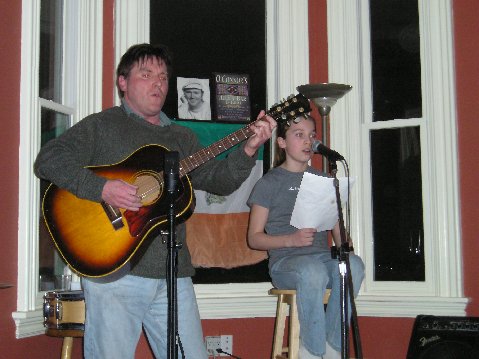
Monday, July 17, 2006
Billy Collins Writes a Poem
I could have sworn I saw him sitting there,
sitting calmly in his white writing lair.
Books neatly arranged, pens and paper too,
shushed words once rousted awaiting their debut.
He fingers a button on his sweater,
reminding him of a childhood winter.
Remembering, yes, he was turning ten.
On a snowy trail, he found a brown wren.
His hands, amnions, inside his blue vest,
hoping it would feel like a mother’s nest,
he ran the way home in his sturdy shoes,
the brown wren eupneic, in repose.
He looks out the window listening to Mingus,
picks up his pen and starts his first sentence.
It’s not about the wren or turning ten.
He’s writing about his mother again.
Seeing her now in her black wool crepe dress
giving his father a relinquished caress.
While sitting in his cherished paisley chair,
the son looking on, the silent steward.
It was then he realized how he was bound
to writing about her eyes tightly wound.
The dangling gray glance she gave him when
he proudly showed her the brown winter wren.
If he could not make her happy, then who?
Writing about this for years now to hew
a cenotaph of a son’s love at ten
to make up for the love of lesser men.
Debra McLaughlin
sitting calmly in his white writing lair.
Books neatly arranged, pens and paper too,
shushed words once rousted awaiting their debut.
He fingers a button on his sweater,
reminding him of a childhood winter.
Remembering, yes, he was turning ten.
On a snowy trail, he found a brown wren.
His hands, amnions, inside his blue vest,
hoping it would feel like a mother’s nest,
he ran the way home in his sturdy shoes,
the brown wren eupneic, in repose.
He looks out the window listening to Mingus,
picks up his pen and starts his first sentence.
It’s not about the wren or turning ten.
He’s writing about his mother again.
Seeing her now in her black wool crepe dress
giving his father a relinquished caress.
While sitting in his cherished paisley chair,
the son looking on, the silent steward.
It was then he realized how he was bound
to writing about her eyes tightly wound.
The dangling gray glance she gave him when
he proudly showed her the brown winter wren.
If he could not make her happy, then who?
Writing about this for years now to hew
a cenotaph of a son’s love at ten
to make up for the love of lesser men.
Debra McLaughlin
Poetry Night at the Elementary School (or How to Write a Poem)
My mother said,
"curious facts
stop mirrors."
Pupils consider,
"what is the job
of a rose?"
Aphids fold paper air planes
masticate spitwads,
consume brown and stolid
tables,
bite by tiny
bite.
Andrea Seek
"curious facts
stop mirrors."
Pupils consider,
"what is the job
of a rose?"
Aphids fold paper air planes
masticate spitwads,
consume brown and stolid
tables,
bite by tiny
bite.
Andrea Seek
Wednesday, February 22, 2006
Subscribe to:
Posts (Atom)
